

If you’ve scrolled through social media, asked a voice assistant a question, or used an app that recommends what to watch next, you’ve already interacted with Artificial Intelligence — even if you didn’t realize it. AI has quietly become part of everyday life, and it’s changing how we work, communicate, and make decisions.
But what exactly is Artificial Intelligence? In this beginner’s guide, we’ll break it down in plain, simple language — no technical jargon, no confusion. By the end, you’ll understand what AI really means, how it works, and why everyone’s talking about it.
What is Artificial Intelligence (AI)?
Artificial Intelligence, or AI, refers to technology that enables computers and machines to perform tasks that normally require human intelligence. This includes things like understanding language, recognizing images, solving problems, making decisions, and learning from experience.
In simple terms, AI is about teaching machines to “think” and “learn” in ways that mimic how humans process information — though it’s important to note that AI doesn’t actually think or feel like a human does. It processes huge amounts of data, identifies patterns, and uses those patterns to make predictions or decisions.
Think of AI as a very fast, very focused pattern-recognition system. It doesn’t get tired, doesn’t need sleep, and can analyze millions of data points in seconds — something no human could do.
A Brief History of AI (Without the Boring Parts)
AI isn’t a brand-new idea. The concept dates back to the 1950s, when computer scientists first started asking: “Can machines think?” Early AI systems were simple rule-based programs. Over decades, as computing power grew and massive amounts of data became available, AI evolved into the sophisticated systems we see today — from chatbots to self-driving cars.
The recent explosion of AI in daily life is largely thanks to advances in an area called machine learning, which we’ll explain next.
How Does AI Work?
At its core, AI systems work through three main steps:
- Data Collection – AI needs data to learn from, whether it’s text, images, numbers, or sound.
- Pattern Recognition – Using algorithms, the AI studies this data to find patterns and relationships.
- Prediction or Action – Based on what it has learned, the AI makes a decision, prediction, or generates a response.
The more quality data an AI system has, the better it gets at its task — similar to how a person improves at something with more practice.
Types of Artificial Intelligence
Not all AI is the same. Here’s a simple breakdown of the main categories:
1. Narrow AI (Weak AI)
This is the AI we use every day. It’s designed to perform a specific task — like facial recognition, spam filtering, or language translation. Most AI in use today falls into this category.
2. General AI (Strong AI)
This refers to a hypothetical AI that could perform any intellectual task a human can. It doesn’t exist yet and remains a topic of research and debate.
3. Machine Learning (ML)
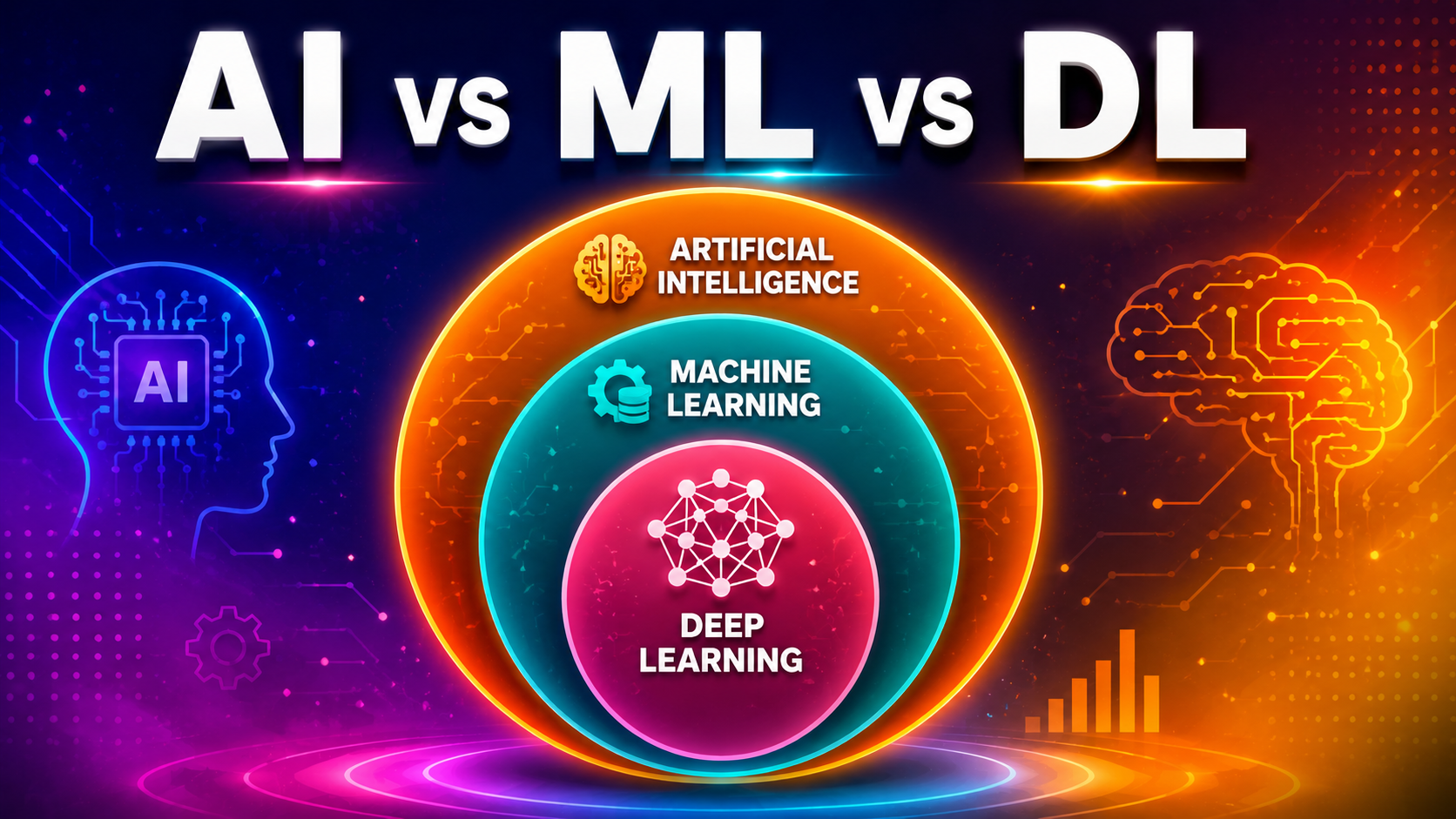
A subset of AI where systems learn from data instead of being explicitly programmed. Instead of following fixed rules, the system improves its performance based on experience.
4. Deep Learning
A more advanced form of machine learning inspired by the human brain’s neural networks. It’s what powers technologies like image recognition and advanced chatbots.
5. Generative AI
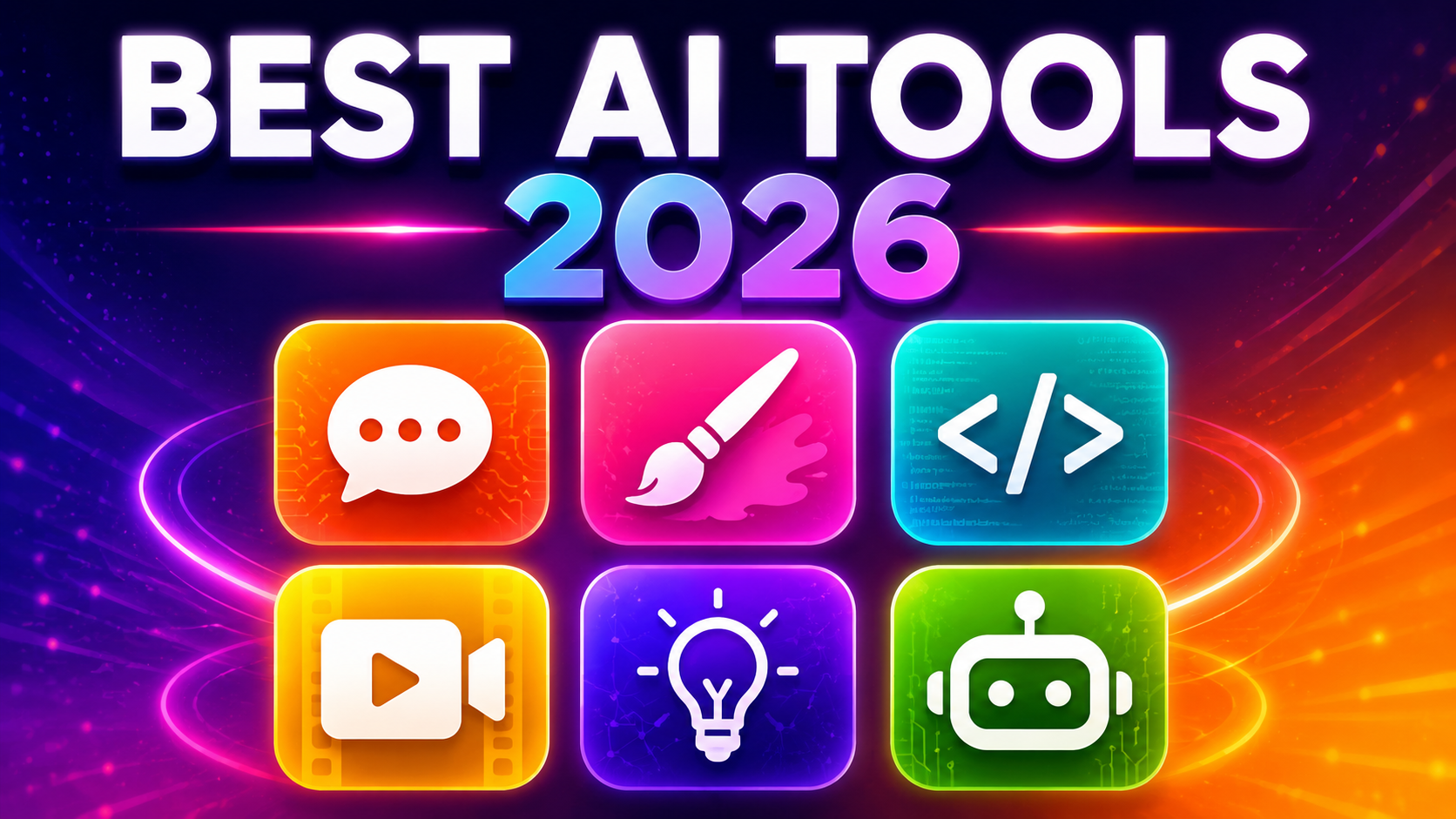
This is the AI behind tools that can create text, images, music, or code — like the kind used in modern AI writing assistants and image generators.
Real-World Examples of AI You Already Use
AI is more common than most people realize. Here are everyday examples:
- Voice assistants like Siri, Alexa, and Google Assistant
- Recommendation systems on Netflix, YouTube, and Spotify
- Navigation apps like Google Maps predicting the fastest route
- Spam filters in your email inbox
- Face unlock on smartphones
- Chatbots for customer support
- Fraud detection systems used by banks
Each of these relies on AI working behind the scenes to make your experience faster, safer, or more personalized.
Why is AI Important?
AI matters because it’s transforming industries at a pace we haven’t seen before. Here’s why it’s such a big deal:
- Efficiency: AI can complete repetitive or data-heavy tasks far faster than humans.
- Accuracy: In fields like healthcare, AI can help detect patterns in medical scans that might be missed by the human eye.
- Personalization: From shopping to entertainment, AI tailors experiences to individual preferences.
- Innovation: AI is driving breakthroughs in areas like drug discovery, climate modeling, and robotics.
Common Myths About AI
Myth 1: AI will replace all human jobs. While AI will change many jobs, it’s more likely to automate specific tasks rather than entire professions, and it will also create new kinds of jobs.
Myth 2: AI can think and feel like humans. AI processes data and recognizes patterns, but it doesn’t have consciousness, emotions, or genuine understanding the way humans do.
Myth 3: AI is always accurate. AI systems can make mistakes, especially if trained on biased or incomplete data. Human oversight is still essential.
Is AI Safe? Understanding the Concerns
Like any powerful technology, AI comes with challenges — including data privacy, bias in decision-making, and questions about job displacement. Researchers, companies, and governments are actively working on guidelines and regulations to ensure AI is developed and used responsibly. Being informed about both the benefits and risks helps us use AI more thoughtfully.
How to Start Learning About AI
If you’re curious to go deeper, here are simple ways to start:
- Follow trusted tech news sources covering AI developments
- Try beginner-friendly AI tools like chatbots or image generators to see AI in action
- Take an introductory online course on AI or machine learning basics
- Read case studies of how AI is used in industries you’re interested in
Final Thoughts
Artificial Intelligence isn’t science fiction anymore — it’s a practical, everyday technology shaping the way we live and work. Understanding the basics of AI helps you make sense of the tools around you and prepares you to navigate a future where AI will only become more present.
Whether you’re a student, a professional, or just someone curious about technology, learning about AI today puts you one step ahead for tomorrow.
Frequently Asked Questions (FAQs)
Q1: What is Artificial Intelligence in simple words? AI is technology that allows machines to perform tasks that usually require human intelligence, such as understanding language or recognizing patterns.
Q2: What are the main types of AI? The main types include Narrow AI, General AI, Machine Learning, Deep Learning, and Generative AI.
Q3: Is AI the same as machine learning? No. Machine learning is a subset of AI. AI is the broader concept, while machine learning is one of the methods used to achieve it.
Q4: What are some everyday examples of AI? Voice assistants, recommendation systems, navigation apps, and spam filters are all common examples of AI in daily life.
Q5: Will AI replace human jobs? AI is more likely to automate specific tasks rather than replace entire jobs, while also creating new opportunities in emerging fields.