


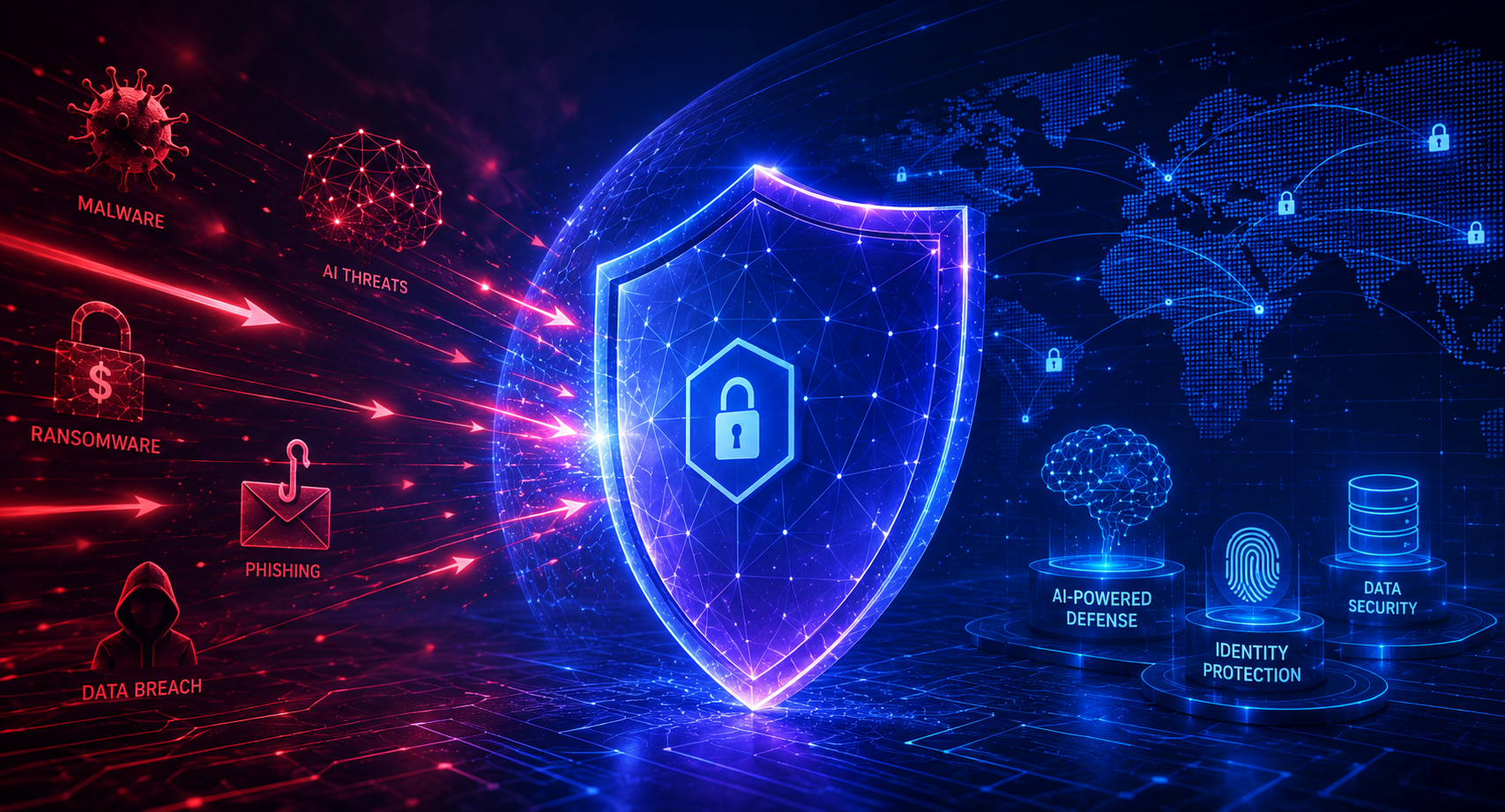
In an increasingly connected world, cybersecurity isn’t just a tech issue—it’s a fundamental part of our daily lives. As we move through 2026, the digital landscape faces unprecedented challenges driven by rapid AI adoption, sophisticated cybercriminals, and evolving geopolitical tensions. According to recent reports, cybercrime costs are projected to soar, with attacks becoming faster and more targeted than ever before.
At The Vibgyor, we believe informed readers make safer digital citizens. This guide dives deep into the current state of cybersecurity, offering practical advice whether you’re an individual protecting your personal data or a business leader securing operations. We’ll explore emerging threats, effective defenses, and forward-looking strategies to build true resilience.
Table of Contents
- The Current State of Cybersecurity in 2026
- Major Cybersecurity Threats in 2026
- Key Trends Shaping Cybersecurity
- Essential Cybersecurity Best Practices
- Cybersecurity for Individuals vs. Businesses
- Real-World Examples and Case Studies
- The Role of AI in Cybersecurity
- Future Outlook and Preparation Tips
- Conclusion
The Current State of Cybersecurity
Cyber incidents continue to rise dramatically. Global cybercrime costs are expected to approach or exceed $10.5 trillion annually, making it one of the world’s largest “economies.” Organizations report frequent attacks, with eCrime breakout times dropping to as little as 27-29 minutes in some cases.
Small businesses and individuals remain particularly vulnerable, often lacking the resources of large enterprises. Supply chain attacks and third-party risks have surged, affecting even well-protected organizations through their vendors.
Major Cybersecurity Threats
1. AI-Powered and Agentic Attacks Cybercriminals now leverage AI for automated reconnaissance, adaptive malware, and hyper-personalized phishing. Deepfakes and synthetic identity fraud are on the rise, making social engineering more convincing.
2. Ransomware and Modern Extortion Ransomware remains a top concern, but tactics have evolved to include data theft and double extortion. Attackers target critical infrastructure and demand payment to prevent leaks.
3. Supply Chain and Third-Party Vulnerabilities One weak link in the supply chain can compromise thousands. Inheritance risks from third-party software top the list for many organizations.
4. Identity-Based Attacks Identity is the new perimeter. Password sprays, credential stuffing, and MFA bypass techniques dominate. Zero Trust models are becoming essential.
5. Quantum Computing Threats While not fully realized, “harvest now, decrypt later” attacks push organizations toward post-quantum cryptography.
Other Notable Threats: Configuration errors, malware-free fileless attacks, and state-sponsored espionage.
Key Trends Shaping Cybersecurity
- Autonomous AI on Both Sides: Defenders deploy AI agents for SOC automation, while attackers use similar tech.
- Zero Trust Becoming Standard: Continuous verification replaces implicit trust.
- Regulatory Volatility: New mandates increase compliance burdens but drive better resilience.
- Cloud and Identity-Centric Security: Focus shifts to securing hybrid environments.
- Cyber Inequity: Smaller entities lag, widening the gap in global resilience.
Essential Cybersecurity Best Practices
Implementing strong fundamentals protects against most threats:
- Use Strong, Unique Passwords + Password Managers: Avoid reuse.
- Enable Multi-Factor Authentication (MFA) Everywhere: Especially for email and financial accounts.
- Keep Software Updated: Enable automatic updates to patch vulnerabilities.
- Regular Backups: Follow the 3-2-1 rule (3 copies, 2 media types, 1 offsite).
- Employee Training: Regular phishing simulations and awareness programs.
- Antivirus and Endpoint Protection: Use reputable solutions with behavioral detection.
- Firewall and Network Security: Segment networks where possible.
- Secure Mobile Devices: Treat phones as primary attack vectors.
- Incident Response Plan: Know what to do if breached.
Pros and Cons of Common Tools:
| Tool/Approach | Pros | Cons |
|---|---|---|
| MFA | Highly effective | User friction possible |
| Password Managers | Strong unique passwords | Single point of failure risk |
| AI Security Tools | Fast detection | False positives, new risks |
| Zero Trust | Granular control | Complex implementation |
Cybersecurity for Individuals vs. Businesses
For Individuals: Focus on personal hygiene—strong passwords, cautious clicking, VPN on public Wi-Fi, and monitoring credit reports.
For Businesses (Especially SMBs): Invest in training, access controls, vendor due diligence, and cyber insurance. Small businesses face high attack rates but can implement affordable layered defenses.
Real-World Examples and Case Studies
- Supply Chain Attack Example: A major vendor breach in 2025 affected thousands of downstream companies, highlighting visibility issues.
- Ransomware on Critical Infrastructure: Attacks on healthcare and education sectors disrupted services, costing millions and endangering lives.
- AI Deepfake Scam: Fraudsters used voice cloning to impersonate executives, leading to unauthorized wire transfers.
These cases show that even prepared organizations can fall victim without layered defenses and quick response.
The Role of AI in Cybersecurity
AI is a double-edged sword. It accelerates attacks but also powers predictive defense, anomaly detection, and automated response. “Agentic SOCs” represent the future, where AI agents handle routine tasks, freeing humans for complex decisions.
However, “Shadow AI” (unmanaged tools) introduces new risks that organizations must govern.
Future Outlook and Preparation Tips
Expect continued acceleration of threats alongside better tools. Post-quantum readiness, advanced identity management, and international cooperation will be key. Start by auditing your current posture, prioritizing high-impact basics, and staying informed.
Pros of Strong Cybersecurity: Peace of mind, regulatory compliance, competitive advantage. Cons: Initial costs and time investment—but far outweighed by breach consequences.
Conclusion
Cybersecurity in 2026 demands vigilance, education, and proactive measures. By understanding threats and implementing proven strategies, you can significantly reduce your risk. At The Vibgyor, we’re committed to empowering our readers with reliable insights. Prioritize your digital safety today—your future self will thank you.
Stay secure, stay informed.
(Word count: approx. 2450)
FAQs
1. What are the biggest cybersecurity threats in 2026? AI-powered attacks, ransomware, supply chain vulnerabilities, and identity theft top the list. Proactive defense is essential.
2. How can individuals improve their cybersecurity? Use strong unique passwords, enable MFA, keep software updated, and be wary of phishing attempts.
3. Is Zero Trust security necessary for small businesses? Yes, it provides strong protection by verifying every access request, especially in hybrid work environments.
4. How does AI impact cybersecurity? AI helps both attackers and defenders. It enables faster, smarter threats but also advanced detection and response tools.
5. What should I do if I suspect a data breach? Change passwords immediately, monitor accounts, report to authorities, and consider credit monitoring.
6. Are free antivirus programs enough in 2026? Basic protection helps, but premium solutions with behavioral analysis offer better defense against sophisticated threats.
7. How often should I back up my data? Regularly—ideally automated daily or weekly, with multiple copies following the 3-2-1 rule.
8. What is post-quantum cryptography? Encryption designed to resist future quantum computers that could break current standards.