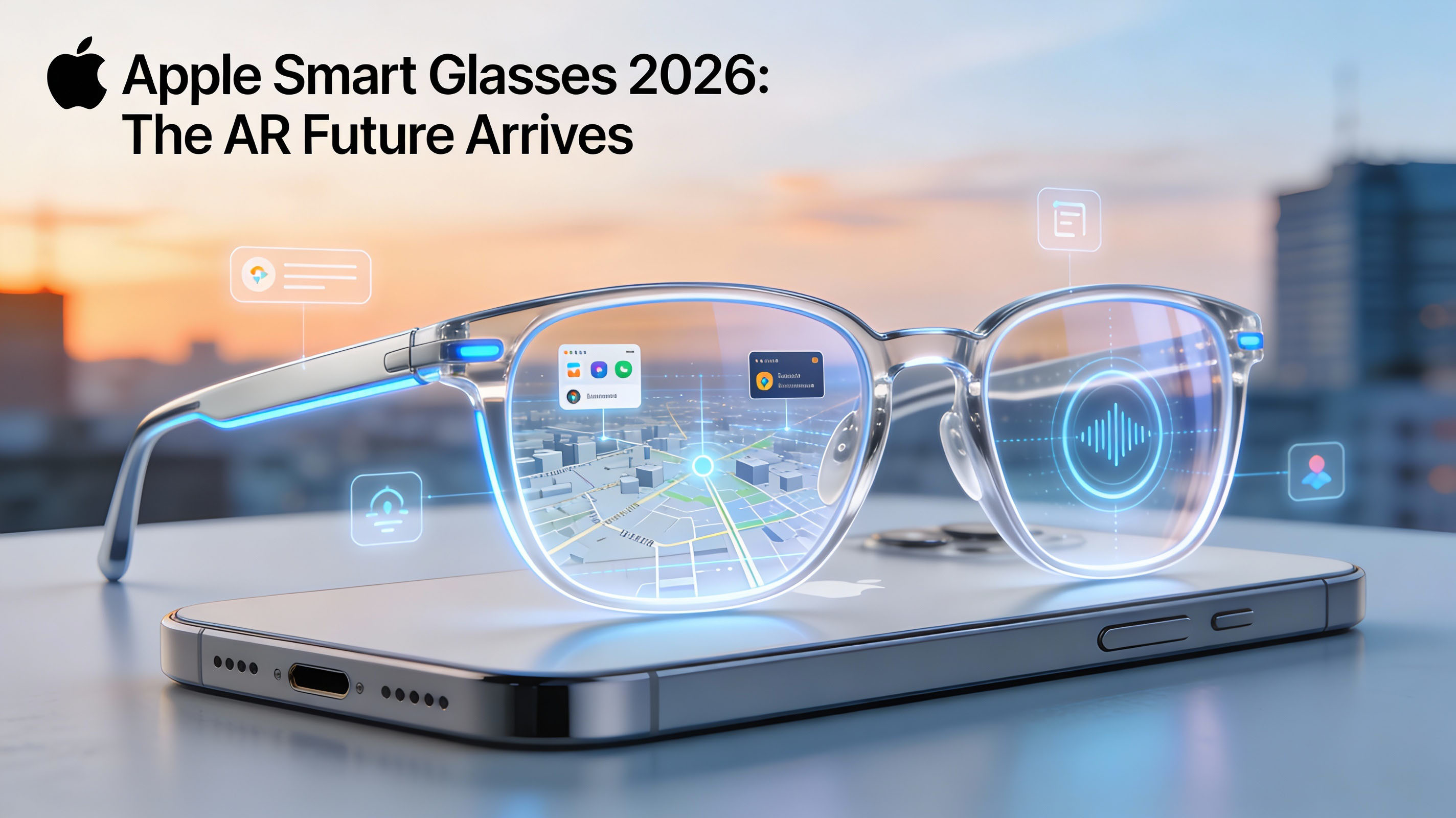
As we step into 2026, the wearable world is buzzing with one question: When will Apple finally slip into the smart glasses game? After years of whispers and Vision Pro teases, fresh leaks from an early iOS 26 build paint a picture of Apple's long-awaited entry—a lightweight, AI-infused pair of specs that could eclipse Meta's Ray-Bans and redefine how we interact with our devices. No clunky headsets here; think sleek frames that whisper directions, snap discreet photos, and summon Siri with a glance. At The Vibgyor, we're diving into the rumors, rumored specs, and why this could be Apple's biggest wearable leap since the Watch. Buckle up—your next commute might just get a holographic upgrade.
The Build-Up: Why 2026 Feels Like The Year for Apple Smart Glasses
Apple's AR ambitions aren't new—remember Project Titan's pivot or the 2023 Vision Pro splash? But 2026 marks the pivot to everyday elegance. A massive leak from iOS 26's prototype spilled over 30 upcoming products, spotlighting smart glasses as a cornerstone alongside a foldable iPhone and budget MacBook. Analysts like those at Tom's Guide call it a "pivotal year," with Apple aiming to capture the $50B smart eyewear market by blending AR smarts into something you'd actually wear to brunch.
The timing? Spot-on. With Meta's Ray-Bans selling out and Google's AR patents piling up, Apple's ecosystem lock-in (hello, seamless iPhone pairing) could tip the scales. X is electric with predictions: One thread hails it as the "ecosystem king," outshining rivals in privacy and polish. Unveiling at WWDC or CES 2026 seems likely, with mass production kicking off late this year for a 2027 ship—potentially 3-5 million units in the debut wave. Price? Rumors peg it at $300-$500, undercutting Vision Pro's sticker shock while packing pro-level perks.
Rumored Features: What Makes These Glasses "Apple Smart"?
Forget bulky prototypes—these are tipped to be featherweight frames (under 50g) with a Ray-Ban-like vibe: Stylish, subtle, and secretly stacked. No full AR display out the gate (that's for a beefier 2028 model), but expect micro-LED projectors for heads-up notifications and gesture controls that feel intuitive, not gimmicky.
Here's the scoop on standout specs, pieced from leaks and supply chain whispers:
| Feature | Details | Why It Matters |
|---|---|---|
| AI-Powered Siri 2.0 | On-device processing for voice commands, real-time translation, and contextual smarts (e.g., "Remind me to call Mom when I'm near the store"). | Turns glasses into a proactive assistant—faster than your Watch, private like AirPods. Integrates with Apple Intelligence for predictive nudges. |
| AR Navigation & Overlays | Subtle HUD for turn-by-turn directions, object recognition (e.g., "That's a gluten-free spot"), and live captions for calls/videos. | Hands-free commuting magic—safer than glancing at Maps, rivaling Snap Spectacles' AR flair. |
| Cameras & Sensors | Dual 12MP shooters for photos/videos, plus health trackers (UV exposure, posture alerts) synced to Health app. | Discreet content creation without pulling out your phone; privacy modes to pause recording on command. |
| Battery Breakthrough | Apple Watch-derived S-series chip for 18+ hours of juice, wireless charging via iPhone dock. | All-day wear without bulk—solves the "dead by dinner" gripe plaguing competitors like Rokid. |
| Ecosystem Sync | Instant iPhone/iPad handoff for editing AR clips or sharing live views; optional prescription lenses. | Lock-in gold: Your glasses "know" your calendar, messages, and fitness goals out of the box. |
Powered by a custom R2 chip (not iPhone silicon, to keep it light), these glasses prioritize efficiency—running SLMs for offline AI without draining your data plan. Early renders suggest titanium frames in classic Apple hues, with audio piped through open-ear bone conduction for calls and podcasts.
The Competition: How Apple Stacks Up Against Meta and Beyond
Apple won't enter a vacuum. Meta's Ray-Ban Meta glasses ($299) already nail the "cool factor" with Instagram Live and AI summaries, but lag in AR depth and battery (8 hours max). Apple's play? Superior integration and privacy (on-device encryption, no always-on listening). Snap's Spectacles (AR-focused, $380) lead in fun filters, but Apple's health ecosystem could edge them for fitness buffs.
X chatter pits them head-to-head: "Apple defeats Meta at their own game—polish over gimmicks," one analyst predicts, citing ecosystem moats. Globally, Rokid's travel-savvy specs and Halliday's privacy-first design add spice, but Apple's scale (1B+ iOS users) could dominate U.S./EU markets by 2028.
Challenges and What Could Go Wrong
No launch is flawless. Privacy hawks worry about always-on cams—Apple's response? Granular controls and end-to-end encryption, per leaks. Battery and comfort remain hurdles; early betas might ship with software quirks, echoing AirPods Pro's debut. Regs like the EU AI Act could delay features, but Apple's compliance track record shines.
On the flip side, if nailed, these glasses could boost AR adoption 40% in wearables, per Geeky Gadgets forecasts—unlocking apps for education, retail, and remote work.
Final Thoughts: Are Apple Smart Glasses Your Next Must-Have?
2026 could crown Apple the AR kingpin, turning smart glasses from niche to necessity. With leaks flowing like Cupertino coffee, keep an eye on WWDC for the big reveal. Will they fold into your daily grind seamlessly, or fizzle like Google Glass? We're betting on the former—polished, private, and profoundly useful.
What's your take: Game-changer or overkill? Sound off in the comments. For more 2026 tech teases, hit subscribe.
—Team The Vibgyor