Introduction: The AI Power Shift No One Saw Coming
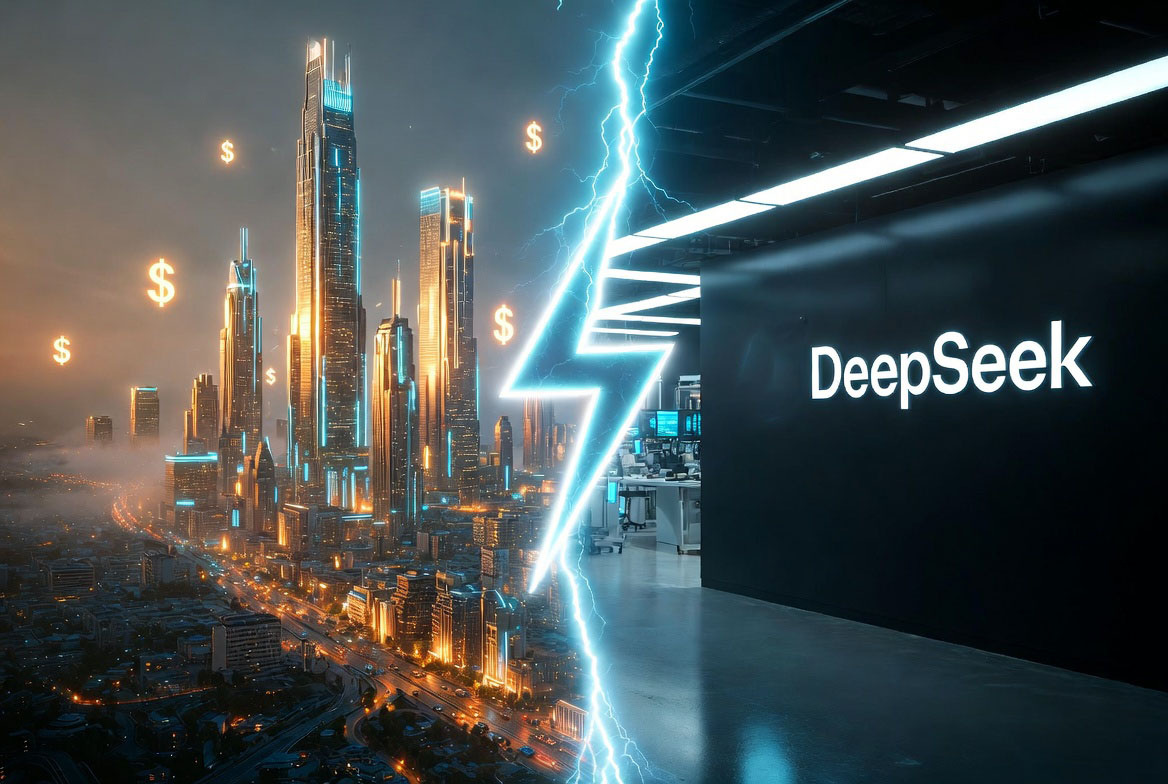
In 2026, the AI landscape looks dramatically different from just a year ago. Silicon Valley – home to OpenAI, Anthropic, Google, and Meta – long dominated with massive investments and proprietary breakthroughs. But a Hangzhou-based Chinese startup, DeepSeek, has turned the tables. Starting with its R1 model in early 2025 and evolving through V3 and now teasing V4 (expected mid-February 2026 with coding focus), DeepSeek delivers near-frontier performance at a fraction of the cost.
This isn't just about one model; it's a paradigm clash: Silicon Valley's "bigger is better" approach (billions in compute, closed ecosystems) versus DeepSeek's efficiency-first strategy (MoE architecture, optimized training on older hardware). The result? Stock market jitters, praise from Sam Altman, and widespread adoption of DeepSeek APIs among developers – even in the US.
For more on DeepSeek's origins and impact, check this TechCrunch article on how DeepSeek changed Silicon Valley's landscape.
DeepSeek's Journey: From Underdog to Disruptor
Founded in 2023, DeepSeek exploded onto the scene with DeepSeek-V3 (trained reportedly for ~$5.6M) and R1 (January 2025), a reasoning powerhouse. By 2026, iterations like V3.2 and the upcoming V4 emphasize coding, long-context handling, and agentic tasks.
Key innovations:
- Mixture-of-Experts (MoE) for efficiency – activates only needed parameters.
- Strong reinforcement learning for math, coding, and logic.
- Open-weight releases under MIT license, enabling self-hosting.
DeepSeek's models now top charts on platforms like OpenRouter for cost-performance, often 20-50x cheaper than equivalents.
Head-to-Head: Benchmarks and Real-World Performance
No single model wins everything in 2026, but DeepSeek punches above its weight in key areas.
Here's a simplified comparison table (aggregated from sources like ArtificialAnalysis, OpenCompass, and independent tests in early 2026):
| Benchmark / Area | DeepSeek (V3/V4 approx.) | OpenAI (GPT-5.2 / o-series) | Anthropic (Claude Opus 4.6) | Google (Gemini 3 Pro) | Winner Notes |
|---|---|---|---|---|---|
| Math (MATH / AIME) | ~90-96% | ~88-92% | ~85-90% | ~92% | DeepSeek edges in pure math |
| Coding (HumanEval / SWE-Bench) | 82-90% (strong in repo-level) | 80-85% | 80-88% (leads Verified) | 78-85% | DeepSeek V4 rumored to lead coding |
| Reasoning (GPQA / ARC-AGI) | High 70s | Mid 80s | High 70s | 90%+ | Gemini strong, DeepSeek competitive |
| General (MMLU) | ~88-90% | ~90%+ | ~88-90% | ~90%+ | Close race |
| Cost per 1M Input Tokens | $0.07-$0.55 | $3-$15 | $15+ | $5-10 | DeepSeek dominates efficiency |
DeepSeek excels in technical tasks like math and coding, often matching or beating pricier models. Claude leads in nuanced agentic workflows, Gemini in massive context (2M tokens), and GPT in versatility.
To visualize the cost-performance edge, here's a conceptual chart explanation (imagine a scatter plot):
- X-axis: Performance Score (averaged benchmarks, higher better)
- Y-axis: Cost Efficiency (performance per dollar, higher better)
DeepSeek clusters high on both axes – top-right quadrant – while Silicon Valley models sit high-performance but low-efficiency due to premium pricing. This "value frontier" makes DeepSeek ideal for startups, enterprises scaling agents, or budget-conscious devs.
The Cost Revolution: Why DeepSeek Wins on Price
Silicon Valley burns billions on training (e.g., GPT-4 estimates $100M+). DeepSeek achieves similar results with far less compute, thanks to clever architecture and access to hardware stockpiles.
API pricing reality in 2026:
- DeepSeek: Often under $1/M tokens (e.g., $0.27 input for V3.2 variants).
- OpenAI/Claude: $5-60/M tokens for frontier access.
For high-volume use (e.g., agent swarms, coding assistants), DeepSeek can be 10-50x cheaper. Many US startups quietly integrate it via OpenAI-compatible APIs, proving the disruption is real.
Read more on this pricing shock in this Reuters piece on DeepSeek's impact.
Broader Implications: Geopolitics, Innovation, and the Future
DeepSeek's rise highlights China's focus on efficiency amid US chip restrictions – proving innovation thrives under constraints. It democratizes AI: Open-source weights let anyone run frontier-level models locally.
Challenges remain:
- Silicon Valley leads in multimodal (Gemini) and safety-aligned reasoning (Claude).
- Allegations of model distillation spark debates.
- Geopolitical tensions could limit access.
Yet, 2026 predictions point to hybrid futures: Western ecosystems + Chinese efficiency. DeepSeek isn't "winning" outright – it's forcing Silicon Valley to innovate faster on cost and openness.
Conclusion: The Race is On, and It's Global
DeepSeek vs. Silicon Valley isn't a zero-sum battle; it's acceleration. Chinese efficiency meets Valley creativity, pushing AI forward for everyone. Whether you're building agents, coding apps, or researching – test DeepSeek today. The era of expensive exclusivity is fading.
For the latest on DeepSeek V4's release and benchmarks, follow official updates on their site or Hugging Face.
Frequently Asked Questions (FAQs)
- What is DeepSeek AI? DeepSeek is a Chinese AI lab creating efficient, high-performing models like R1, V3, and upcoming V4, often open-weight and cost-effective.
- How does DeepSeek compare to OpenAI in 2026? DeepSeek matches or beats in math/coding at 10-50x lower cost; OpenAI leads in general versatility and ecosystem integration.
- Is DeepSeek better for coding than Claude or GPT? In many 2026 tests, yes – especially repo-level and long-context coding. V4 is rumored to outperform rivals here.
- Why is DeepSeek so much cheaper? MoE architecture, efficient training, and optimized inference reduce costs dramatically compared to dense Silicon Valley models.
- Can I use DeepSeek for free? Many versions are open-source (MIT license) for self-hosting; API access is very affordable, with free tiers available.
- Has DeepSeek really disrupted Silicon Valley? Yes – it caused market dips in 2025, widespread adoption, and forced focus on efficiency. But Valley still leads in some areas.
- What is DeepSeek V4? Expected February 2026 release, focused on advanced coding, long prompts, and enterprise workflows – internal tests suggest coding superiority.
- Are Chinese AI models safe to use? Like any tool, evaluate for your needs; open-weights allow transparency, but always check data privacy and compliance.
- Will DeepSeek replace GPT or Claude? Not fully – best results come from combining models (e.g., DeepSeek for cost-heavy tasks, Claude for nuanced reasoning).
- Where can I try DeepSeek? Via their chat interface, API, or platforms like Hugging Face and OpenRouter for easy integration.