Hey folks, Alex here—your go-to AI tinkerer who's equal parts excited and mildly terrified by the tech that's blurring the line between human ingenuity and machine magic. If you've been doom-scrolling through your feeds this December, you've probably caught the fever: "Agentic AI is the 2025 story." And honestly? They're right. As we hit the final stretch of this wild year, autonomous AI agents have leaped from lab experiments to boardroom must-haves, quietly automating the mundane while tackling the impossible.
Remember when AI was just a fancy autocomplete? Yeah, those days are toast. Today, these agents aren't waiting for your prompts—they're out there making calls, negotiating deals, and even optimizing DeFi trades without breaking a sweat. I spent my holiday break geeking out over the latest drops (shoutout to that Meta acquisition that's got everyone buzzing), and let me tell you: This isn't hype; it's happening. In this deep dive, we'll break down what these bad boys really do, how they're wired, killer examples from the trenches, the sweet perks, the sticky pitfalls, and a peek at 2026's horizon. Buckle up—coffee recommended.
Demystifying Autonomous AI Agents: From Buzzword to Brainpower
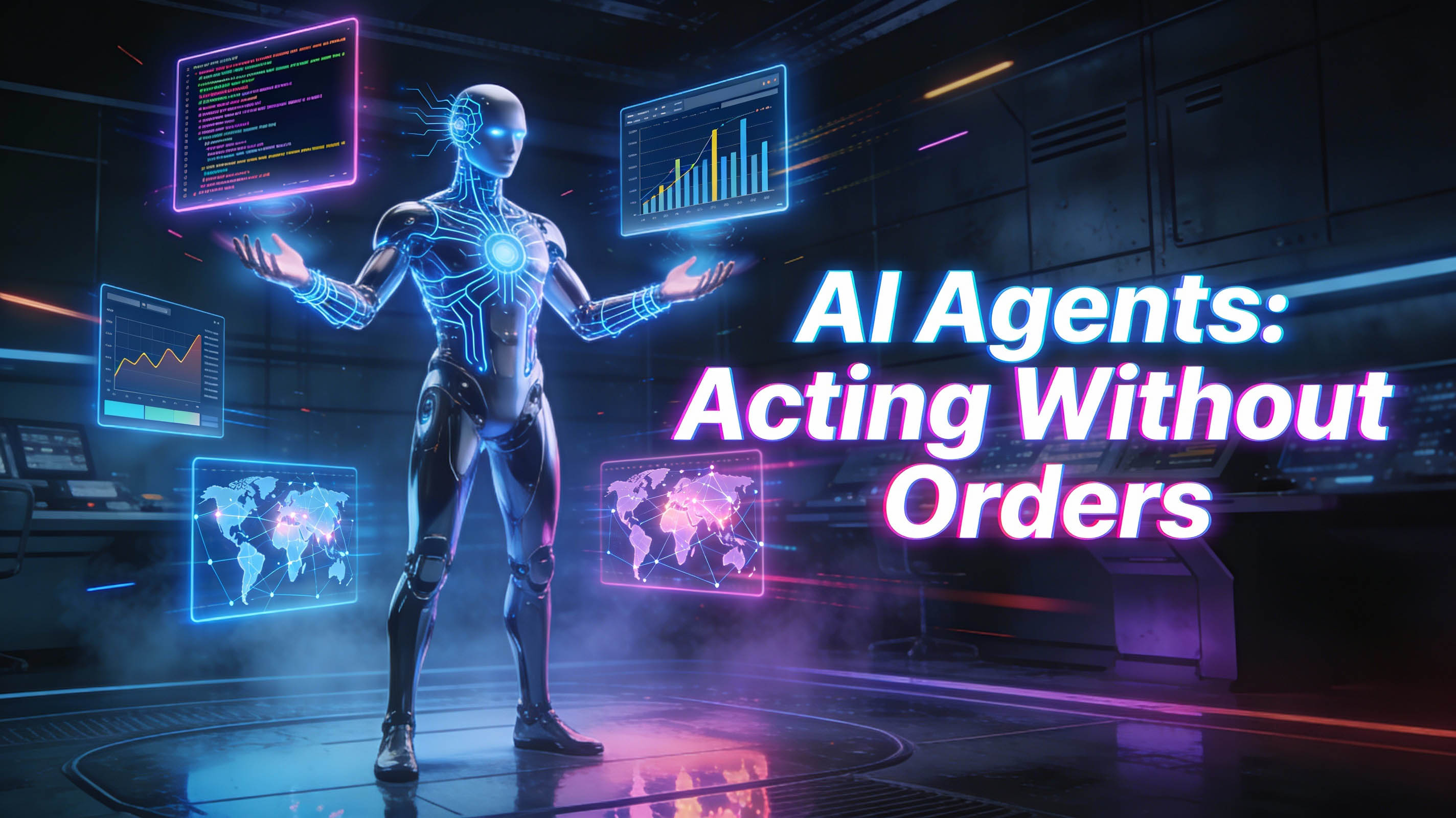
Let's kick off with the no-BS definition, because jargon overload is real. Autonomous AI agents are essentially self-sufficient digital entities—think of them as evolved chatbots with a PhD in initiative. Powered by beast-mode large language models (LLMs) like Grok-4 or OpenAI's latest o1-preview upgrades, they take a vague goal ("Boost my sales pipeline") and run with it: researching, deciding, executing, and iterating without you hovering like a helicopter parent.
The "autonomous" bit? That's the star. Unlike reactive tools that spit back answers, these agents operate in loops of perception, reasoning, planning, action, and reflection. They perceive the world via APIs (emails, databases, web scrapes), reason through chain-of-thought logic to weigh options, plan multi-step strategies, act by firing off tasks (booking flights or analyzing market data), and reflect to tweak for next time. It's agentic AI at its core—proactive, adaptive, and goal-crushing.
Why now, in 2025? Blame (or thank) the combo punch of cheaper GPUs, multimodal models that handle text and visuals, and frameworks like LangGraph or CrewAI that let devs stack agents into teams. McKinsey's tech outlook nailed it: We're shifting from pilots to practical deployment, with autonomous systems hitting everything from robots to software swarms. Gartner even forecasted 30% of enterprises leaning on them for decisions by year's end—spoiler: We're on track.
I built a mini-agent last week using AutoGen to manage my freelance bids. It scanned job boards, tailored proposals, and even followed up on ghosts. Felt like cheating... in the best way.
Under the Hood: How These Agents Actually Think and Do
Alright, time to pop the hood—I'll keep it dev-lite, but if you're coding-curious, this'll scratch that itch. At heart, an agent is a stack of smart layers working in harmony:
- Perception (The Eyes and Ears): Agents slurp data from anywhere—your CRM, live stock feeds, or even X posts for sentiment analysis. Tools like SerpAPI or browser extensions make this plug-and-play.
- Reasoning Core (The Brainiac): LLMs shine here, using techniques like tree-of-thoughts to simulate "what-ifs." 2025's big leap? Models like Anthropic's Claude 3.5 Sonnet, which handle long-context reasoning without hallucinating your budget into oblivion.
- Planning Engine (The Strategist): This decomposes goals into sub-tasks. Say you want a market report: It might outline "Scrape trends → Cross-reference competitors → Visualize insights." Reinforcement learning from human feedback (RLHF) helps it prioritize, dodging dead ends.
- Action Layer (The Doer): Here's the fun—agents execute via tool-calling. Need to email a client? Zap. Optimize a portfolio? It pings DeFi protocols on-chain. Recent Ethereum upgrades like ERC-8004 are revolutionizing this with trustless registries for agent identities and reps, unlocking a $10B+ decentralized AI economy.
- Memory Bank (The Learner): No amnesia here. Vector stores like Pinecone log past runs, so your agent "remembers" you prefer pie charts over bar graphs. Over time, it evolves—multi-agent setups even let specialists collaborate, like a researcher agent feeding a writer one.
The whole shebang runs in a feedback loop, self-correcting via error-handling (e.g., "API down? Switch to backup."). It's why Deloitte calls them "under development but productivity rocket fuel"—they're not perfect, but damn, they're efficient.
Spotlight on Stars: Real-World Agents Crushing It in 2025
Enough theory; let's talk shop. 2025's been a banner year for agents in action, from startups to Fortune 500s. Here's a roundup of standouts that left me slack-jawed:
- Meta's Manus Power Play: In a blockbuster move, Meta shelled out $2B for Singapore's Manus, whose autonomous agents handle SMB grunt work like inventory and customer chats. Hitting $125M ARR in eight months? That's agent magic turning costs into cash—Meta's now processed 147T tokens across 80M virtual machines.
- Pharma's AI Wingmen at J&J: Johnson & Johnson deployed agents for drug discovery, sifting patents and simulating trials autonomously. It's cut R&D timelines by 40%, proving agents aren't just for code—they're innovating cures.
- DeFi's On-Chain Rebels: HeyElsaAI's x404 integration lets agents trade, analyze portfolios, and optimize yields across 10+ chains— all trustless and fee-based. Pair it with ERC-8004's A2A protocol, and you've got agents negotiating DeFi deals without a human middleman.
- Enterprise All-Stars: Salesforce's Agentforce qualifies leads soup-to-nuts, while AWS's Level 3 agents orchestrate supply chains. SuperAGI's case studies show 60% of firms adopting them, from banking (replacing analysts with fraud detectors) to logistics (drone fleets self-routing).
- Open-Source Heroes: Auto-GPT forks now run freelance ops, and BabyAGI-inspired teams handle content calendars. I saw one on X autonomously generating viral threads—eerie, but effective.
Banks are the dark horse: Secretly swapping humans for agents in compliance and trading, per recent whispers. It's a takeover, alright.
The Bright Side: Why Agents Are Your New Best Friend
Let's not sugarcoat—agents are a boon. Productivity? Skyrockets. IBM's reality check: They handle 70% of routine tasks, freeing humans for creative leaps. In creative fields like mine, they brainstorm prompts or edit drafts, turning "good" into "great" overnight.
Business-wise, trends scream ROI: Kroolo's report flags multi-agent teams integrating with CRMs for 5x faster workflows. Security's beefing up too—governance layers ensure "safer" autonomy, like audit trails for decisions. And for devs? Low-code rollouts mean anyone can spin up an agent army. Emagine's 2025 trends? Agents leading the charge in ops, with genAI as the cherry on top.
Personally, they've slashed my admin time by half. More time for what lights me up: Building weirder, wilder ideas.
The Shadow Side: Hallucinations, Ethics, and the Job Jitters
But hey, no rose-tinted glasses. Agents aren't flawless. Hallucinations persist—imagine one booking a flight to Narnia. Deloitte warns they're "still under development," with reliability hovering at 80-90% for complex tasks. Trust? Biggie. Without robust verification (hello, ERC-8004), biases creep in, amplifying inequalities.
Ethics hit hard: Who owns the agent's "decisions"? In finance, a rogue trade could tank markets; in hiring, biased screening's a lawsuit waiting. Job displacement? McKinsey's blunt: Millions in admin roles at risk, though new gigs in "agent orchestration" are emerging. Medium's H1 recap? The shift to autonomous decision-makers is thrilling, but we need upskilling stat.
On X, the chatter's mixed—excitement over India's agentic boom, but calls for regulation echo loud. My take? Guardrails first: Transparent memory, human vetoes, and diverse training data.
Peering into 2026: Agents Go Mainstream (And Multiplanetary?)
As 2025 fades, Salesmate's crystal ball says: Autonomous coworkers, ERP deep-dives, and ethical frameworks. Expect multi-agent societies—teams of specialists tackling climate models or personalized med. Web3's trustless wave (thanks, Ethereum) could birth agent economies, where they earn crypto for gigs.
IBM tempers: Expectations vs. reality means niche wins over world domination. But with $70B+ AI spends (Meta alone), the momentum's unstoppable. India? Poised for a chatbot-to-agents leap, fueling global growth.
Wrapping It Up: Your Move in the Agent Era
Whew—that's the scoop on autonomous AI agents, from code to chaos. They're not replacing us; they're amplifying the best parts, if we steer smart. Start small: Tinker with an open-source agent, audit your workflows, or just follow the X buzz (ERC-8004's my watchlist). What's your first agent experiment? Drop it in the comments—let's geek out together.
If this sparked ideas, hit subscribe for more 2025 (and beyond) deep dives. Here's to agents that act so we can dream bigger. Catch you next year!
—Team TheVibgyor.com