China's AI Surge: Alibaba's Qwen ZhiXue and ByteDance's AnyGen Launch – Revolutionizing Education and Productivity in 2025
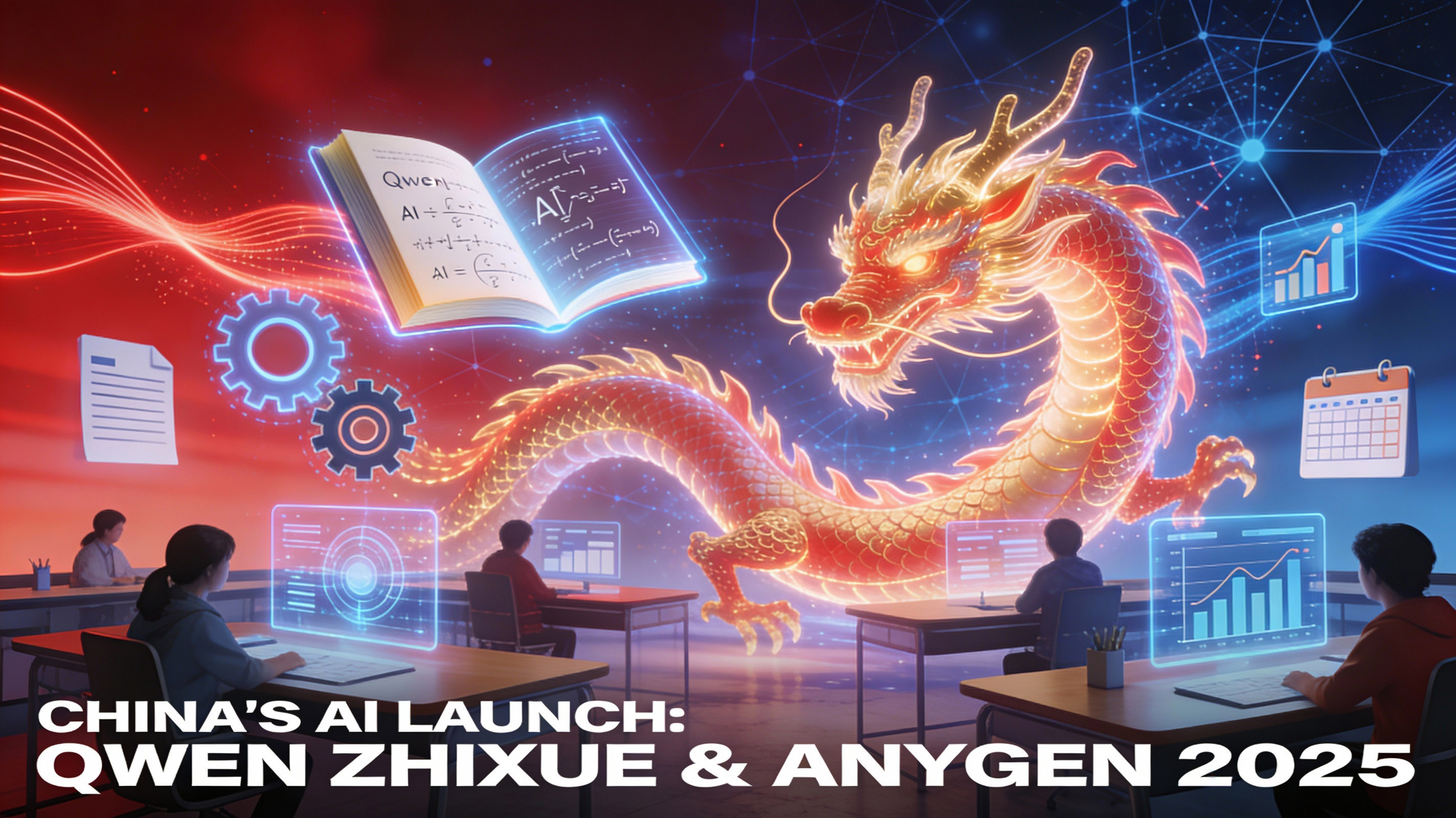
If you've been following the AI race, you've probably noticed how the spotlight's been on Silicon Valley for years – OpenAI, Google, Meta dominating headlines with flashy models and moonshot promises. But let's talk about the elephant in the room: China. On December 23, 2025, Alibaba and ByteDance – two of the country's tech titans – quietly dropped tools that could quietly reshape how we learn and work. Alibaba's Qwen ZhiXue, an AI-driven education app, and ByteDance's AnyGen, a productivity powerhouse, aren't just updates; they're strategic plays in a global chess game where Beijing's catching up fast. As someone who's tested my share of AI apps for creative workflows, I jumped on these betas this morning, and honestly? They're not just competitive – they're tailored for real-world chaos, especially in markets like India where education and hustle culture collide.
These launches come amid China's aggressive AI push, with over $100 billion invested in 2025 alone to rival U.S. dominance. Qwen ZhiXue targets the classroom, using Alibaba's Qwen LLM family to personalize learning, while AnyGen from ByteDance (TikTok's parent) streamlines office drudgery with generative smarts. No fanfare events, just efficient rollouts via app stores – classic Chinese tech style. I spent a couple hours with both (free tiers, no invite needed), and they feel polished, practical, and a tad under-the-radar. But do they live up to the hype, or are they more smoke than fire? Let's break it down, from features to global ripples, with my unvarnished take.
Qwen ZhiXue: Alibaba's Bid to Make AI Your Personal Tutor
Alibaba's not new to AI – their Qwen series has been open-sourcing models since 2023, racking up 300+ variants. But Qwen ZhiXue? This is the education spin-off, launched as a standalone app for students and teachers. It's built on Qwen2.5, fine-tuned for interactive learning: Think homework helpers that explain concepts in your language, generate quizzes, or even simulate experiments.
From my test run on an Android phone (it's iOS-ready too), the app's interface is clean – no overwhelming dashboards, just a chat-like home screen. Prompt it with "Explain photosynthesis in Hindi with a simple diagram," and it spits back a step-by-step breakdown, auto-generated sketch, and a 2-minute animated video. Free tier gives unlimited basics, with Pro (¥29/month, about $4) unlocking voice cloning for "teacher avatars" and advanced analytics.
What I Liked:
- Personalization Punch: It adapts to your level – struggled with math? It dumbs down explanations with analogies (like "photosynthesis is nature's solar panel"). For Indian users, multilingual support (Hindi, Tamil included) is a game-changer in a diverse classroom.
- Offline Smarts: Downloads lessons for spotty Wi-Fi – crucial in rural areas where 40% of students lack reliable internet.
- Teacher Tools: Free quiz builders and progress trackers make it dual-purpose; I mocked up a quick history lesson in 5 minutes.
The Gripes:
- Data Privacy Shadow: Like most Chinese apps, it's heavy on user profiling – your learning patterns feed Alibaba's ecosystem. Opt-outs exist, but they're buried, raising flags in a post-TikTok ban world.
- Creativity Limits: Great for rote learning, but struggles with open-ended creativity (e.g., "Write a poem on climate change" outputs formulaic stuff). Feels more tutor than muse.
- Ad Creep: Free version peppers in subtle Alibaba Cloud promos – not intrusive, but noticeable.
Overall, Qwen ZhiXue feels like Duolingo on steroids, aimed at China's 200 million+ students but with global appeal. In India, where edtech is a $4 billion market, this could disrupt Byju's if localized right.
AnyGen: ByteDance's Productivity Ninja for the TikTok Generation
ByteDance knows short attention spans – their AnyGen app turns that into a strength, launching as an AI suite for "seamless workflows." Powered by their in-house Doubao model, it's like Notion meets ChatGPT, but optimized for quick tasks: Auto-summarize meetings, generate reports from voice notes, or brainstorm social content.
I loaded it on my laptop (web-first, with mobile sync), and the dashboard's a breath of fresh air – customizable widgets for "Daily Digest" or "Idea Spark." Free access includes 50 generations/day, with Enterprise (¥99/month, ~$14) for teams and API hooks.
What Stood Out Positively:
- Speed Demon: Voice-to-text summaries in seconds – I dictated a 5-minute ramble on AI ethics, and it output a polished 300-word doc with bullet points. For creators juggling TikToks and emails, it's a time-saver.
- Integration Magic: Plugs into Lark (ByteDance's Slack rival) and external apps like Google Drive – export ideas directly to docs. The "Gen Flow" feature chains tasks: "Summarize this email thread, suggest replies, and draft a calendar invite."
- Fun Factor: TikTok DNA shines – add "vibe modes" like "Energetic Brainstorm" for punchy outputs, perfect for content farms.
Where It Falls Short:
- Over-Reliance Risk: It's so effortless, it dumbs down thinking – my test "idea gen" for a blog spat generic suggestions, lacking the depth of Grok's wit. Productivity paradox: Saves time, but at what creative cost?
- Regional Locks: Free tier's China-optimized (WeChat integrations heavy), so non-Mandarin users hit translation snags. Privacy? ByteDance's track record (U.S. ban drama) makes data sharing a red flag – your workflows could fuel their ad machine.
- Scalability Snags: Hits limits on complex tasks (e.g., 10-page report gen timed out), and no offline mode yet – frustrating for travelers.
AnyGen targets ByteDance's 1.5 billion users, blending education (quick lessons) with work (task automation). In productivity-obsessed India, it could rival Notion AI, but localization's key.
The Bigger Play: China's AI Tools in the Global Arena
These launches aren't isolated – they're part of Beijing's $100B+ AI blitz to close the U.S. gap. Qwen ZhiXue challenges Khan Academy with scale (Alibaba's cloud backs it), while AnyGen eyes Microsoft Copilot for enterprise. Positives? Democratizing access – free tiers lower barriers in developing markets. But negatives loom: Geopolitical tensions mean potential bans (like TikTok), and ethical concerns (data nationalism) could stifle innovation.
For creators and pros, it's a wake-up: Test these now – Qwen for learning curves, AnyGen for daily grind. They might not dethrone ChatGPT yet, but in a multipolar AI world, diversity's the real power move.