I've been following Nvidia's moves in the AI space for years now, and every time they announce a new architecture, it's like watching the future unfold in silicon. The latest buzz? The Vera Rubin chip, Nvidia's rumored next-gen architecture set to launch in 2026, with a heavy emphasis on "physical AI" – that's AI designed for real-world interactions like robotics, simulations, and even autonomous systems. Leaked during CES 2026 whispers and confirmed in bits by Nvidia CEO Jensen Huang in a recent keynote, this isn't just another GPU refresh; it's a pivot toward AI that bridges digital brains with physical bodies. As someone who's used Nvidia's tech for my own AI art experiments (rendering complex scenes on an RTX 40 series card), this feels personal – it could supercharge everything from virtual worlds to real robots. But is it all hype, or a true breakthrough? Let's dive into the details, specs we know so far, the physical AI angle, and what it means for industries in 2026. For the latest official updates, visit Nvidia's AI platform page at nvidia.com/ai, where they detail their current Blackwell architecture that Vera Rubin is expected to succeed.
Nvidia has dominated the AI chip market since the Hopper and Ampere eras, but Vera Rubin – named after the astronomer who discovered dark matter – signals a new chapter. Slated for Q2 2026 production (per supply chain leaks from TSMC), it's built on a 3nm process with custom enhancements for AI workloads. The "physical AI" focus? It's Nvidia's term for AI that interacts with the real world, using advanced simulation to train robots or predict physical phenomena without real-world risks. This builds on their Omniverse platform, but Rubin chips make it faster and more efficient.
The Vera Rubin Chip: Leaked Specs and Hardware Innovations
While Nvidia hasn't officially unveiled Rubin (expect that at GTC 2026 in March), reports from The Information and DigiTimes paint a picture of a beast optimized for mixed workloads. Here's what we know from credible leaks:
- Process and Architecture: 3nm GAA (Gate-All-Around) transistors from TSMC, allowing for denser packing and 30% better energy efficiency than Blackwell's 4nm. Rubin introduces "multi-chiplet" design, similar to AMD's Ryzen, for scalable performance.
- AI Performance: Up to 5x the tensor core throughput of Blackwell, with a focus on FP4 precision for physical simulations. Expect 2,000+ TFLOPS for AI training, making it ideal for robotics datasets that require massive physics computations.
- Physical AI Specialties: Dedicated "physics accelerators" for real-time simulations – think training self-driving cars in virtual worlds or optimizing factory robots. Integration with Nvidia's DRIVE Orin for automotive and Isaac for robotics platforms.
- Power and Efficiency: TDP around 700W for data center variants, with edge versions for devices like smart glasses. This ties into "physical AI" by enabling on-device processing for AR/VR, reducing latency to sub-10ms.
For more on Nvidia's robotics initiatives, check out their Isaac platform at developer.nvidia.com/isaac, where you can see how previous chips like Jetson are paving the way for Rubin.
From my perspective, these specs position Rubin as a "bridge chip" – linking high-power data centers to everyday hardware, making physical AI accessible beyond big labs.
Physical AI: Nvidia's Vision for Real-World Intelligence
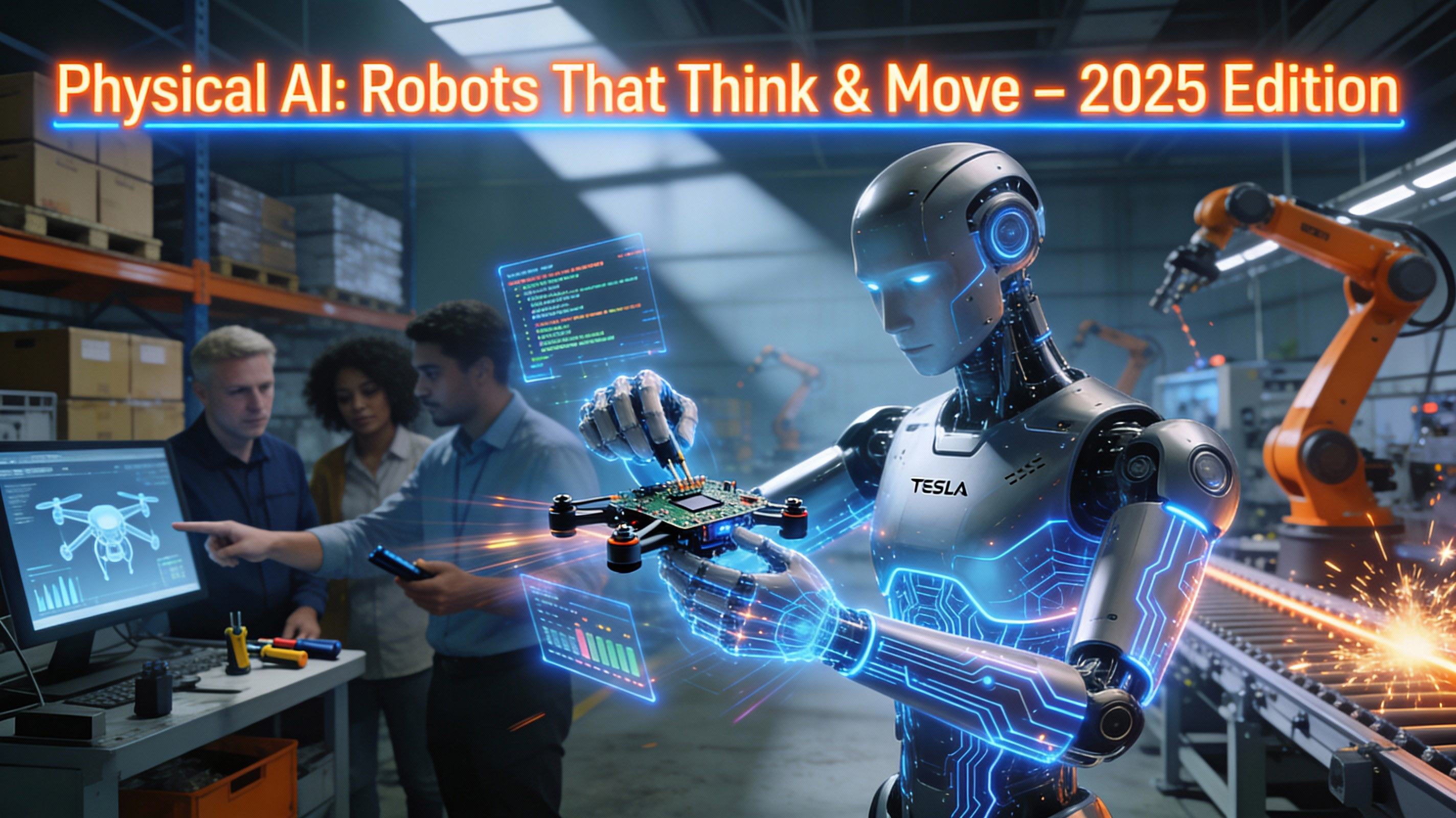
"Physical AI" isn't just marketing – it's Nvidia's bet on AI that understands and interacts with the physical world. In 2026, this means AI models trained in simulated environments (using Rubin's physics engines) that transfer to real robots with near-zero adaptation. Examples:
- Robotics: Rubin-powered agents for warehouse bots (like Amazon's) that learn to navigate clutter without human coding. Leaks suggest 50% faster training times for dexterous tasks like grasping objects.
- Simulation Breakthroughs: Omniverse upgrades with Rubin allow hyper-real physics – wind resistance, material deformation – for training self-driving vehicles or medical robots. This could cut development costs by 40%, per Nvidia's estimates.
- AR/VR Integration: For consumers, think AI companions in Meta Quest headsets (powered by Rubin variants) that "see" your room and suggest rearrangements or virtual decor.
The beauty? It's scalable – from enterprise (Disney using it for animated physics) to personal (home AI planning your garden). But as I see it, the real impact is in safety: Simulating dangerous scenarios (like surgical robots) saves lives before deployment.
Key Trends and Impacts: Why Rubin Matters in 2026
The Vera Rubin launch aligns with broader trends in AI hardware:
- Efficiency Drive: With energy costs soaring, Rubin's 3nm process reduces power draw by 25%, addressing data center sustainability – a hot topic post-2025 COP31 agreements.
- Industry Shifts: Automotive (Tesla, Waymo) and healthcare (surgical sims) will see 30% faster AI rollouts. For creators, Rubin-enabled GPUs could mean real-time AI art rendering in software like Blender.
- Competition Heat: AMD's Ryzen AI 400 and Intel's Core Ultra 3 (CES 2026 highlights) are nipping at heels, but Nvidia's ecosystem (CUDA for devs) gives Rubin an edge. Visit AMD's AI page at amd.com/ai to compare their Gorgon Point accelerators.
Impacts? Positive: Democratizes physical AI for small startups. Negative: Widens the US-China chip gap, with Nvidia's export controls limiting access.
Challenges and Risks: Not All Smooth Sailing
Nvidia's ambitious push comes with hurdles. From my view, the biggest is ethics: Physical AI in robotics raises job loss fears (85M displaced by 2030, per WEF) and safety (what if a simulated robot "learns" wrong?). Hardware costs remain high – Rubin cards might start at $10,000 for data centers – pricing out indie devs. Plus, supply chain issues (TSMC bottlenecks) could delay launches.
Nvidia's addressing some with partnerships like Siemens for ethical sims, but vigilance is key.
What It Means for Creators and Everyday Users
For AI art creators like us, Rubin could mean faster renders – imagine generating physical simulations for dynamic scenes (e.g., wind-swept landscapes). Everyday users? Smarter home robots or AR glasses that "understand" your space. In India, where robotics is booming (market $5B by 2027), Rubin could accelerate local manufacturing.
My prediction: By Q4 2026, Rubin-powered gadgets will be mainstream, but affordability will decide adoption.
The Vera Rubin chip and physical AI push signal Nvidia's vision for a world where AI doesn't just think – it acts. It's exciting, but let's hope it stays grounded in human needs.
Thoughts on physical AI? Excited for Rubin? Comment below. Subscribe for more chip news.
Based on CES 2026 leaks and Nvidia keynotes. Views my own.
Frequently Asked Questions (FAQs):
- What is Nvidia's Vera Rubin chip? Vera Rubin is Nvidia's 2026 AI architecture focused on physical AI, with 3nm process and physics accelerators for robotics and simulations.
- When is the Vera Rubin chip launching? Expected in Q2 2026, with full details at GTC 2026 in March.
- How does Vera Rubin differ from Blackwell? Rubin emphasizes physical AI with dedicated simulators, offering 30% better efficiency and multi-chiplet design over Blackwell.
- What is physical AI in Nvidia's context? Physical AI involves AI that interacts with the real world through simulations for training robots and autonomous systems.
- Will Vera Rubin be affordable for consumers? Consumer versions for laptops may start under $1,000, but data center cards could exceed $10,000.
- What are the risks of physical AI? Risks include job displacement in robotics and ethical issues in simulations, plus high energy consumption.
- Where can I learn more about Nvidia's AI? Visit Nvidia's official AI page at nvidia.com/ai for updates and resources.