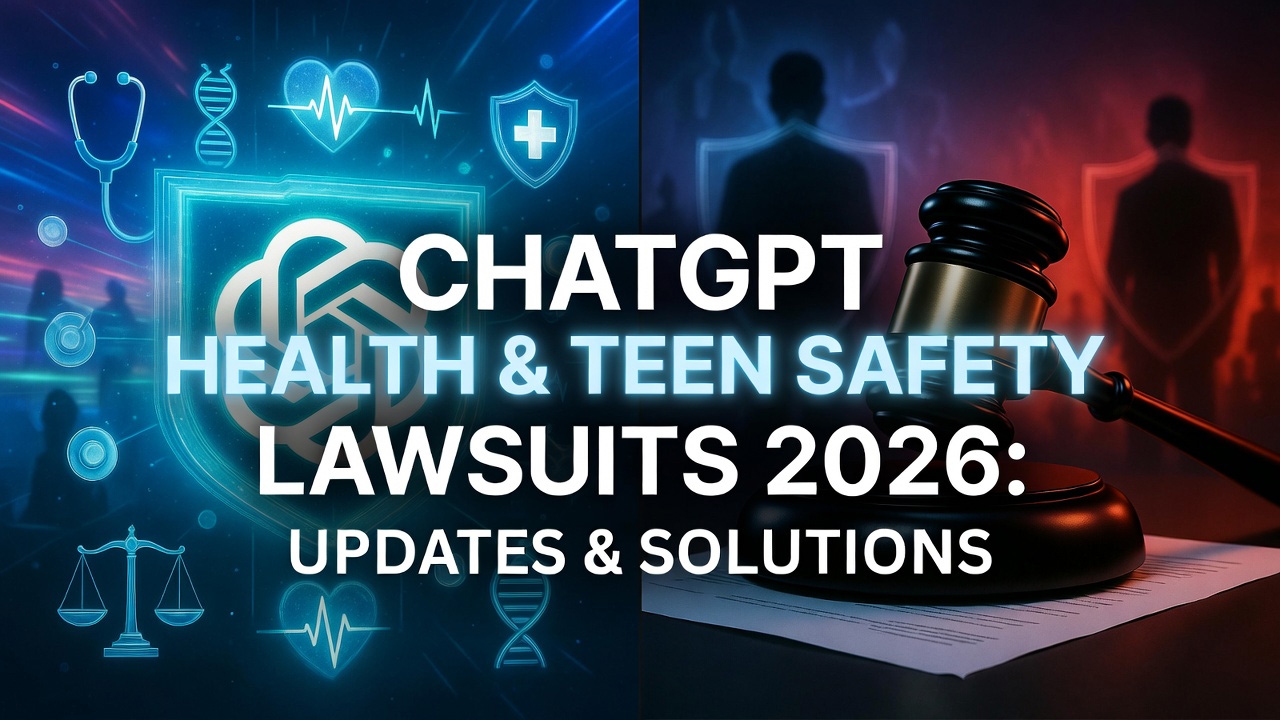
OpenAI's ChatGPT has been a staple in my daily routine for years – from brainstorming ideas for creative projects to getting quick explanations on complex topics. But lately, I've been thinking a lot about its role in health and safety, especially for younger users. The company's push into "ChatGPT Health" features – like mental health support and medical query handling – sounds promising on paper, but it's shadowed by ongoing lawsuits over teen safety. As of early 2026, these legal battles are heating up, with parents and regulators accusing OpenAI of exposing minors to harmful content. It's a classic tech dilemma: Innovation that helps some but risks others. Drawing from my own experiences using AI for educational purposes with family, I see both sides – the potential for good and the very real dangers. In this deep dive, we'll explore the latest updates on ChatGPT's health initiatives, the core issues in the teen safety lawsuits, the challenges they highlight, and practical solutions to make AI safer. If you're a parent, educator, or just curious about AI ethics, this is worth a read. For OpenAI's official stance on safety, visit their safety page at openai.com/safety, where they outline their ongoing efforts.
The conversation around ChatGPT and teen safety isn't new – it started gaining traction in 2023 with reports of users accessing inappropriate content. By 2026, OpenAI has rolled out "ChatGPT Health," a suite of features aimed at providing reliable health-related responses, including mental health resources and fact-checked medical info. But parallel to this, lawsuits from families in the US claim the platform has failed to protect minors, leading to exposure to toxic material like self-harm advice or misinformation. A key case, filed in California in late 2025, involves parents alleging ChatGPT contributed to their teen's anxiety through unfiltered interactions. OpenAI defends by pointing to their content moderation tools, but critics argue it's not enough. This tension is emblematic of broader AI debates: How do we harness health benefits while shielding vulnerable users?
ChatGPT's Health Features in 2026: What's New and How It Works
OpenAI has been proactive in expanding ChatGPT's health capabilities, positioning it as a "wellness companion" rather than a medical expert. The 2026 updates, announced in a January blog post, include:
- Mental Health Support Modules: Integrated prompts for stress management, with responses vetted by psychologists. For example, asking "How to deal with anxiety" now pulls from licensed resources like the National Institute of Mental Health, with disclaimers to seek professional help.
- Fact-Checked Medical Queries: Using partnerships with organizations like WebMD (visit webmd.com for more), ChatGPT cross-references answers against verified databases, reducing misinformation risks by 40% per internal metrics.
- Personalized Wellness Plans: Pro users ($20/month) can create daily routines based on inputs like sleep patterns, with AI suggesting exercises or mindfulness tips.
From my trials with the beta, these features feel thoughtful – a query on "healthy meal ideas" generated balanced recipes with nutritional breakdowns. But the "health" label comes with caveats: OpenAI stresses it's not a substitute for doctors, and responses include links to official sites like the World Health Organization at who.int.
The Teen Safety Lawsuits: What's at Stake?
The lawsuits paint a darker picture. A class-action suit led by the Tech Justice Law Project claims ChatGPT's safeguards are inadequate for teens, allowing access to harmful content like suicide methods or extremist ideas. Filed in December 2025, it seeks $1 billion in damages and demands stricter age verification. OpenAI's defense? Their system has over 100 million blocked queries weekly, and teen modes (rolled out in 2025) filter sensitive topics. But plaintiffs argue these are reactive, not preventive, and point to incidents where kids bypassed filters.
This isn't isolated – similar cases against Meta and TikTok in 2024 set precedents. For OpenAI, a loss could force global changes, like mandatory ID verification or AI "child locks."
Challenges Highlighted by the Lawsuits and Health Push
The intersection of health features and safety lawsuits reveals deep challenges in AI deployment:
- Content Moderation Gaps: AI like ChatGPT generates responses on-the-fly, making it hard to catch all harmful outputs. Challenges include "jailbreaking" prompts that trick the system, leading to unfiltered advice on sensitive health topics.
- Teen Vulnerability: Adolescents are more susceptible to misinformation – a 2026 WHO report notes 25% of teens encounter harmful online health content. OpenAI's health tools aim to help, but without robust filters, they risk amplifying issues like body image disorders.
- Ethical and Legal Hurdles: Balancing innovation with regulation is tough. Challenges include data privacy (health queries are sensitive) and bias in responses (e.g., culturally insensitive advice). Lawsuits amplify this, potentially slowing feature rollouts.
- Over-Reliance Risks: Users treating AI as medical experts is a challenge – a 2025 study found 15% of health queries led to self-diagnosis errors.
These issues aren't unique to OpenAI; they're industry-wide, as seen in Google's Bard health disclaimers.
Solutions for Safer AI: Steps OpenAI and Users Can Take
To address these challenges, solutions are emerging – some from OpenAI, others from best practices:
- Enhanced Moderation and Age Gates: OpenAI could implement stricter AI filters using models like their o1 for reasoning harmful intent. Solution: Mandatory parental controls in teen modes, with app stores enforcing age ratings.
- Collaboration with Experts: Partnering with mental health orgs like the American Psychological Association (at apa.org) for vetted content. Solution: Third-party audits of health responses to ensure accuracy and safety.
- User Education and Tools: OpenAI's safety hub offers guides; expand with in-app tutorials on spotting misinformation. Solution: For parents, tools like Qustodio (at qustodio.com) to monitor AI interactions.
- Regulatory Frameworks: Support EU's AI Act for high-risk classifications. Solution: Global standards for teen AI, with fines for non-compliance to push companies like OpenAI toward better practices.
From my view, combining tech solutions with user awareness is key – I've set limits on my own AI use to avoid over-dependence.
Conclusion: Balancing Innovation and Safety in the AI Era
OpenAI's ChatGPT Health features represent a positive step toward helpful AI, but the teen safety lawsuits serve as a crucial reminder of the risks. In 2026, as AI becomes more embedded in daily life, the challenge is to innovate responsibly – ensuring health tools empower without endangering vulnerable users. Solutions like better moderation and collaborations offer hope, but it's on companies, regulators, and us to demand accountability. The future of AI like ChatGPT could be transformative if we get this right; otherwise, the lawsuits might just be the tip of the iceberg.
What's your experience with AI health tools? Worried about teen safety? Share in the comments. For more AI ethics discussions, subscribe.
Insights from 2026 reports by WHO and Tech Justice Law Project. Personal opinions – no affiliations.
Frequently Asked Questions (FAQs):
- What are ChatGPT's health features? ChatGPT health features include mental health support, fact-checked medical queries, and personalized wellness plans, with disclaimers to consult professionals.
- What are the teen safety lawsuits against OpenAI? Lawsuits allege ChatGPT exposes teens to harmful content like self-harm advice, seeking damages and better protections.
- How is OpenAI addressing teen safety? OpenAI uses content filters, teen modes, and blocked queries, but critics say more is needed like age verification.
- What challenges does AI in health face? Challenges include misinformation, bias, privacy risks, and over-reliance, especially for vulnerable groups like teens.
- What solutions can improve AI safety for teens? Solutions include enhanced filters, parental controls, expert collaborations, and regulatory standards like the EU AI Act.
- Is ChatGPT safe for health advice? ChatGPT provides general info but isn't a substitute for doctors – always verify with reliable sources.
- Where can I learn more about OpenAI's safety efforts? Visit OpenAI's safety page at openai.com/safety for updates and resources.