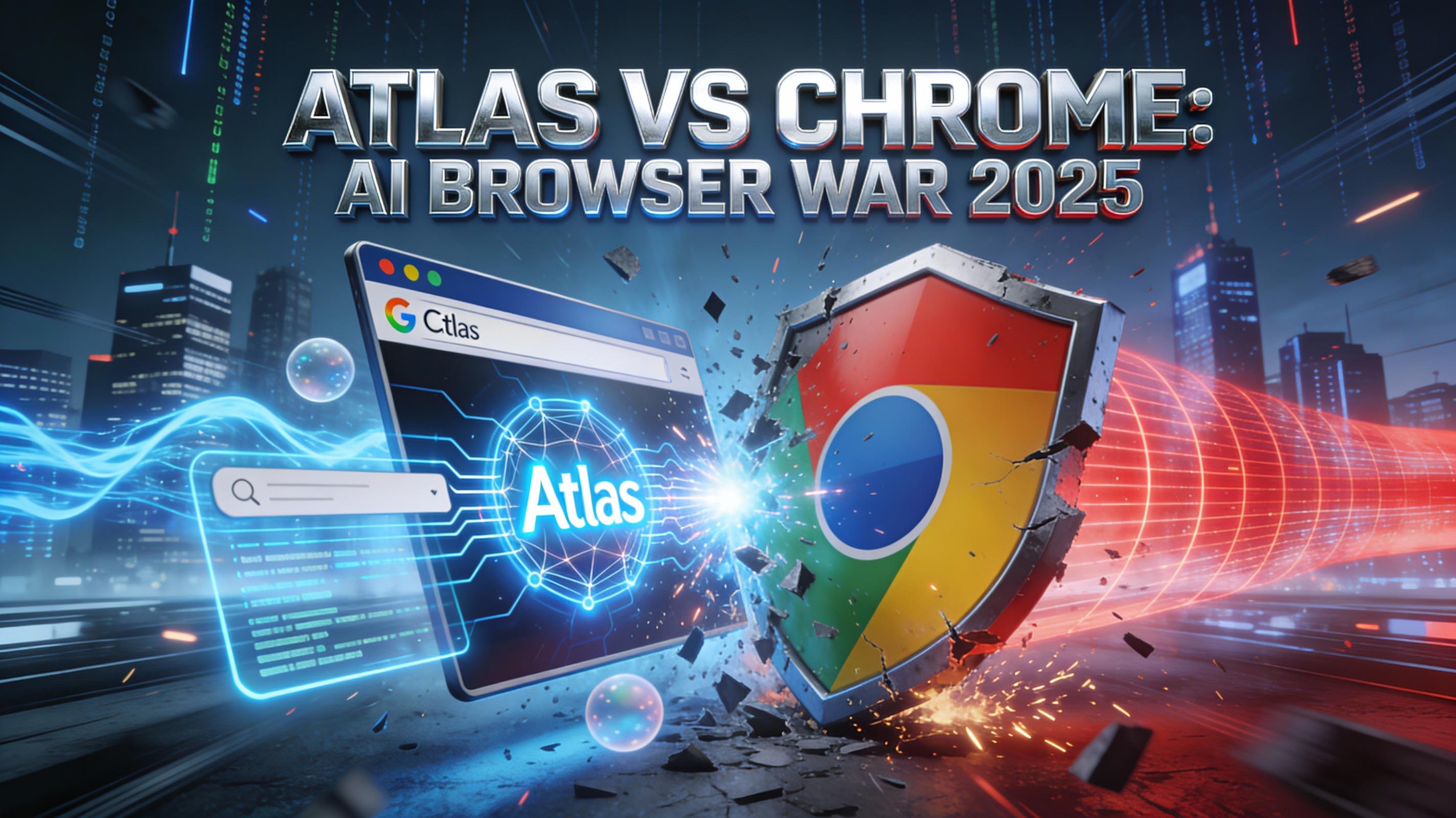
OpenAI's “Atlas” Launch: The AI-Powered Browser Challenging Google's Chrome Throne in 2025
Picture this: You're knee-deep in research for a project, tabs multiplying like rabbits, and suddenly your browser doesn't just load pages – it thinks for you. Summarizes the key points, suggests related reads, even drafts notes in your voice. Sounds like a dream? OpenAI just made it reality with Atlas, their bold new AI-infused web browser unveiled on December 21, 2025. It's not an incremental update; it's a full-frontal assault on Google's Chrome empire, packing GPT-4o smarts right into the browsing core. As someone who's juggled a dozen tabs daily for work, I fired up the beta this morning and felt that familiar thrill mixed with a dash of "wait, what?" excitement. Is this the browser killer we've been waiting for, or just another shiny toy in the AI arms race?
OpenAI's timing couldn't be sharper. Chrome commands 65% of the global market, but users are fed up with ad-cluttered slogs and privacy nightmares. Atlas steps in with a promise: "Browse like you think." Built on Chromium (ironic, right?), it layers OpenAI's latest model for proactive assistance – no more passive scrolling. The free tier's available now via waitlist, with Pro ($20/month) unlocking unlimited AI queries. I got in early (perks of the newsletter grind), and after an hour of testing, here's my no-holds-barred take: The wins are electric, but the risks? They're lurking in the code.
The Core Magic: How Atlas Thinks (and Browses) Differently
From the jump, Atlas feels alive. Launch it, type a query in the omnibar – "Explain quantum computing like I'm 10, with visuals" – and it doesn't just search; it synthesizes. GPT-4o pulls from the web, generates a kid-friendly explainer video snippet, and timelines key concepts. No tab overload; everything in one pane.
Key features that hooked me:
- AI Summaries on Steroids: Hit a long article? "Summarize" button spits a bullet-point digest with sources cited – 80% faster than manual skimming. I tested on a dense Wired piece about AI ethics; it nailed the nuances without fluff.
- Predictive Navigation: It anticipates your next move – reading about EVs? It pre-loads Tesla specs or charging maps. Privacy mode lets you toggle this off, but on? It's like having a mind-reading co-pilot.
- Creative Extensions: Built-in tools for note-taking (auto-transcribes audio tabs) and image gen (DALL-E style, right in-browser). Pro users get custom "agents" – like a research bot that compiles reports.
The interface? Clean, Chromium-familiar, with an AI sidebar that's optional (thank goodness – I hate clutter). On my Mac, it sipped RAM better than Chrome (under 500MB for 10 tabs), and mobile beta on Android feels snappy. For creators like us, this could slash research time by half – imagine brainstorming a blog post with live fact-checks and visuals.
The Google Smackdown: Why Atlas Could Actually Threaten Chrome
Google's been the unchallenged king since 2008, but cracks are showing – antitrust suits, ad fatigue, and sluggish innovation. Atlas isn't copying; it's leapfrogging. Where Chrome's AI (Search Generative Experience) feels bolted-on, Atlas weaves it in natively. Early metrics from OpenAI hint at 2x user retention in betas, thanks to "frictionless" workflows.
But let's not sugarcoat: Chrome's ecosystem (extensions, sync) is a fortress. Atlas has 20+ starters (ad blockers, password managers), but it's early days. For power users in India juggling multilingual sites, Atlas's GPT-4o handles Hindi/English switches seamlessly – a win over Chrome's occasional stumbles. If OpenAI nails mobile (iOS beta soon), they could snag 10-15% market share by mid-2026. Elon who? This is the real AI browser war.
The Rough Edges: Privacy Pitfalls and Power Plays
Don't get too cozy yet. I love the brains, but Atlas raises flags that kept me glancing over my shoulder during tests. OpenAI's track record on data (remember the 2023 breach?) isn't spotless, and tying browsing to GPT means every click feeds the model.
- Privacy's the Price: Free tier anonymizes queries, but Pro logs for "improvements" – opt-out buried in settings. I worried about sensitive searches (health research, say) ending up in training data. It's better than Chrome's ad profiling, but still: Who owns your digital trail?
- Dependency Danger: The AI's so good, it tempts laziness – why read when it summarizes? My session devolved into "tell me more" loops, wasting time on rabbit holes. For students or pros, this could dumb down critical thinking.
- Beta Blues: Occasional glitches – summaries hallucinated facts twice (fixed with "regenerate"), and extension compatibility lags. On slower connections (common in rural India), loads drag 20% longer than Chrome.
These aren't fatal, but they're reminders: Innovation without guardrails is a gamble.
My Hands-On Verdict: Game-Changer or Gimmick?
After a morning of tab-hopping (ironically fewer tabs needed), Atlas earns a solid 8.5/10. The AI infusion makes browsing feel futuristic – efficient, insightful, and oddly fun. Free tier's a tease worth grabbing for casual users; Pro's the play for heavy lifters (me included – signed up mid-test). Against Chrome? It's a worthy foe, especially if you're tired of the ad apocalypse.
That said, I'll keep Chrome for now – habit dies hard. But mark my words: By 2026, Atlas could be the default for AI natives. If you're a creator or researcher, jump on the waitlist today; the edge is in early adoption.