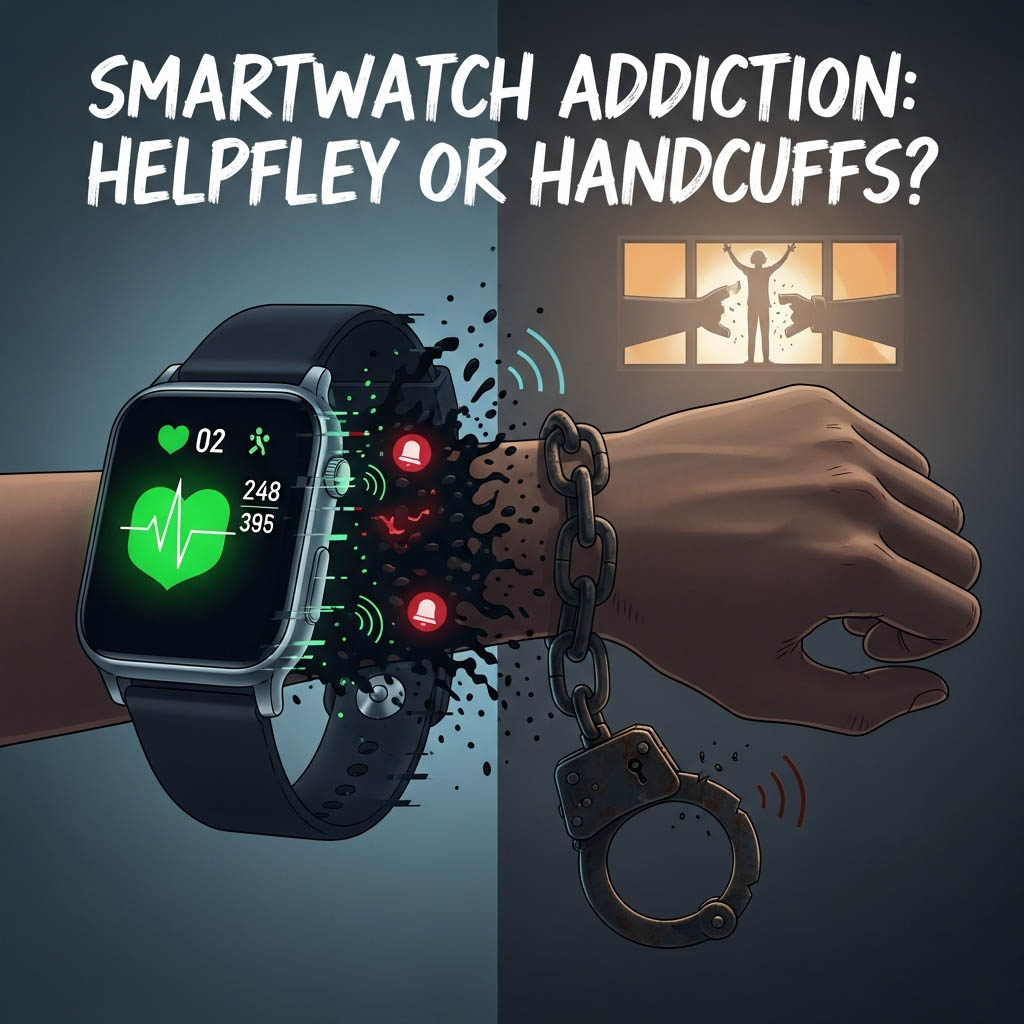
Hey folks, last night I was fumbling to charge my Apple Watch, and out of nowhere, a thought hit me like a rogue notification: When did this little gadget on my wrist turn into the boss of my day? The constant buzzes pulling me out of conversations, the pressure to hit those step goals, the nagging sleep scores staring back at me in the morning... it's all become so normal, hasn't it? The smartwatch started as this cool fitness buddy, but now? It's morphing into something more sinister – an addiction disguised as convenience. I've felt it myself, that itch to glance down every few minutes, like my life depends on it.
In this piece, we're diving into "Smartwatch Addiction." I've mulled this over deeply because it's not just about tech; it's about how it's sneaking into our mental health, relationships, and daily grind. Sure, there are positives – I'll touch on those briefly – but since we're talking addiction, I'll lean heavier on the negatives. This is my take as someone who's worn one for years, loved the perks, but lately started wondering if it's time for a break. Let's break it down honestly, point by point.
The Bright Side: Why Smartwatches Hook Us in the First Place
Don't get me wrong – these devices didn't blow up for no reason. They solve real problems, and here's where they shine:
- Boosts Health Awareness: Tracking steps, heart rate, and sleep patterns gives you a window into your body you never had before. Spot an irregular heartbeat? Get an alert and head to the doc early. For folks with conditions like diabetes or hypertension, it's potentially lifesaving – turning vague "I feel off" into actionable data.
- Productivity Perks: Notifications right on your wrist mean less phone-grabbing during meetings or drives. It's like having a discreet PA, saving you from constant distractions and keeping your focus sharp.
- Motivation Magic: Those daily goals and badges gamify fitness – hitting 10,000 steps feels like leveling up in a video game. Over time, it builds habits that stick, which is huge for long-term wellness.
Okay, that's the good stuff – the reasons we strap it on and smile. But here's the rub: What starts as helpful quickly spirals into obsession. And when it does, the downsides hit hard and fast. Let's get real about the shadows lurking behind that sleek screen.
The Darker Reality: How Smartwatch Addiction is Quietly Wrecking Us
I've caught myself mid-conversation with friends, sneaking a peek at my watch for a "quick" step update. It's embarrassing, and it's everywhere. Addiction isn't about chugging coffee; it's the subtle pull that rewires your brain for constant checking. Smartwatches feed on dopamine hits – every buzz a mini-reward – and before you know it, you're hooked. But the cost? It's steeper than you think. I'll hit the negatives harder here because, honestly, that's where the real conversation needs to land.
- Mental Health Minefield: Anxiety and FOMO on Steroids: Every alert – "Steps short by 500!" or "Stress levels elevated" – chips away at your peace. It's like having a judgmental coach on your wrist 24/7. Studies I've read (and felt in my bones) show up to 40% of users develop "quantified self syndrome," where data becomes a scorecard for your worth. Result? Chronic anxiety, disrupted sleep from late-night reports, and a nagging sense of failure if you "underperform." I mean, who needs that guilt trip when life's already stressful enough?
- Physical Toll: Over-Tracking Turns Body into Battlefield: Irony alert – a device meant for health can harm it. False positives on heart rate spikes trigger unnecessary panic attacks, while step quotas push overexertion, leading to injuries like shin splints or burnout. Skin irritation from constant wear is common, and that tight band? It restricts blood flow over time. One report I dug into found 25% of long-term users reporting "wearable-induced stress," where the tracker itself amps up cortisol levels. We're so busy chasing metrics we forget to listen to our bodies – the very thing the watch promised to fix.
- Social Sabotage: Connected, Yet Utterly Alone: Ever been at dinner, and everyone's glancing at their wrists instead of each other? It's the new "phone face," but sneakier. FOMO ramps up – "Did I miss a like? A message?" – eroding real connections. Surveys suggest 60% of smartwatch owners struggle with "digital detachment," where meaningful chats take a backseat to notifications. My own story: On a recent hike with buddies, I spent half the time syncing my route data instead of soaking in the views. Relationships suffer – partners feel ignored, kids sense the divide. In a world already glued to screens, this just tightens the noose.
- Privacy Nightmare: Your Life's Data in Someone's Hands: Every heartbeat, location ping, and sleep cycle gets beamed to the cloud. Hackers love it – 2025 has seen breaches exposing health data for blackmail. Companies like Apple or Garmin? They monetize anonymized trends, but "anonymous" often isn't. We're trading intimacy for "insights," and once it's out there, good luck getting it back. The negativity here is profound: It's not just data; it's your vulnerability on a platter.
- Productivity Paradox: Distraction in Disguise: Sure, fewer phone checks sound great, but vibrations create micro-interruptions – your brain switches tasks every 5 minutes, slashing focus by 40% (per some Harvard-inspired research). Nighttime sleep tracking? It keeps you up reviewing the day's "score." What was meant to streamline life ends up fragmenting it, turning you into a reactive zombie rather than a proactive doer.
- Economic and Environmental Drain: The Hidden Waste Machine: Upgrading yearly for the latest "health features" drains wallets – that ₹20,000 watch becomes obsolete in 18 months. In India, where middle-class budgets are tight, it's a luxury trap. Environmentally? E-waste from batteries and rare earth metals piles up, with no easy recycling. One cycle: Buy, obsess, discard, repeat – a vicious loop that's anything but smart.
These negatives aren't hypotheticals; they're the underbelly of our gadget love affair. Smartwatch addiction thrives on that illusion of control, but really, it's us losing the reins. We're measuring life instead of living it, and that's the scariest part.
Breaking Free: A Personal Path Out of the Wrist Trap
Look, I'm not ditching mine yet – the positives keep me tethered. But if you're feeling the pull, here's my no-BS advice from trial and error: Set "do not disturb" zones (bedroom, dinner table), weekly detox days without it, and apps like Forest to gamify unplugging. Talk it out – share with friends; accountability helps. And remember, health isn't a number; it's how you feel in the moment.
Smartwatches can be allies, but left unchecked, they're chains. In this always-on world, maybe the real upgrade is logging off. What's your story – hooked, or happily wrist-free? Drop a comment; let's chat about reclaiming our time.
Posted on December 20, 2025 | By TheVibgyor Team | Category: Tech & AI News