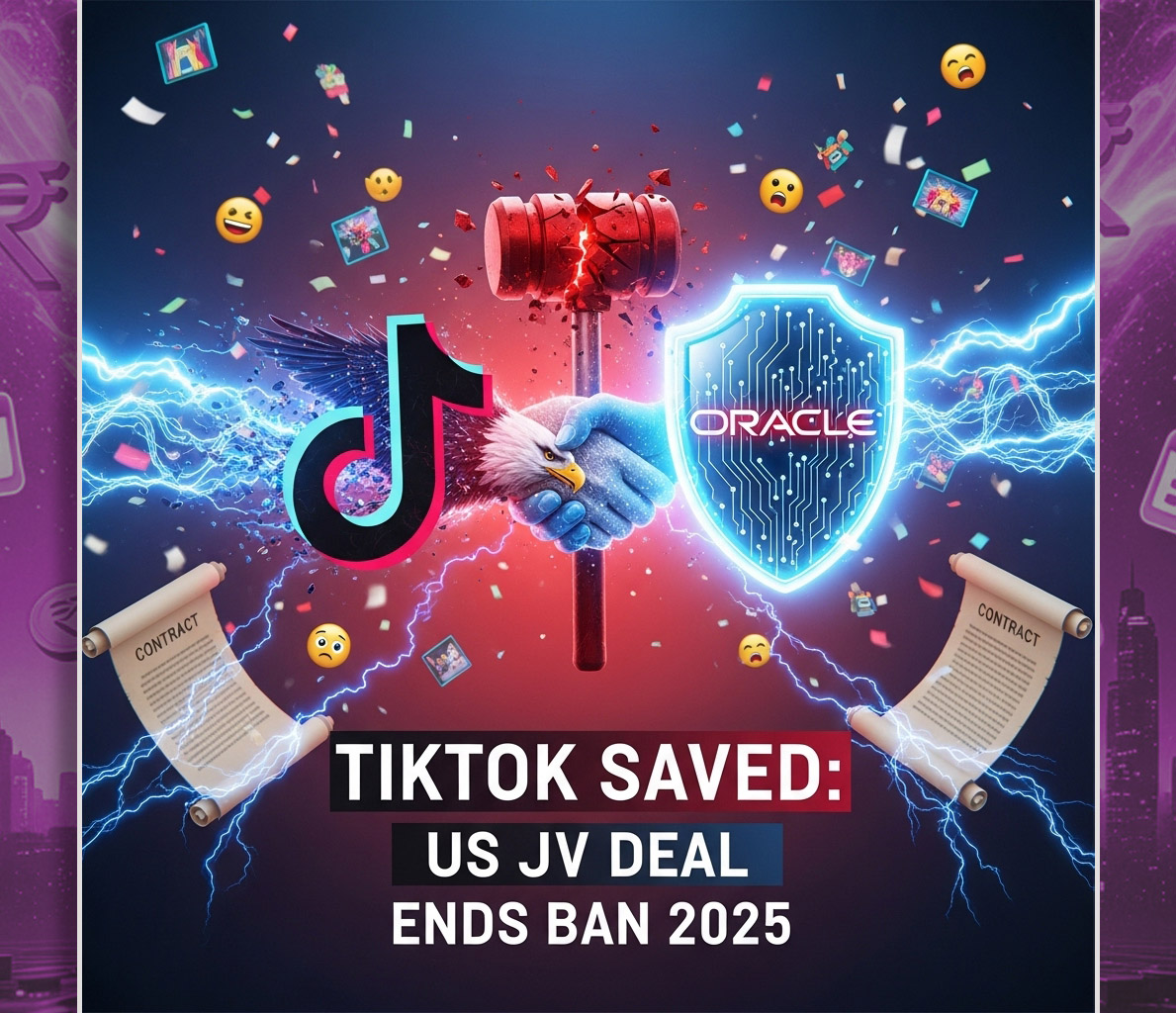
After years of nail-biting deadlines, executive orders, and geopolitical saber-rattling, TikTok has finally dodged a bullet. On December 18, 2025, the ByteDance-owned app announced a landmark joint venture agreement with Oracle and a consortium of American investors, including Silver Lake, to restructure its U.S. operations and sidestep a looming nationwide ban. This Trump-endorsed deal, set to finalize in January 2026, marks the end of a saga that began with national security fears over Chinese data access and could have erased TikTok's 170 million U.S. users overnight.
The agreement comes just weeks after a January 19, 2025, law mandated ByteDance to divest or face shutdown, extending a threat first floated during Trump's first term. In a win for pragmatism over protectionism, the JV creates a U.S.-majority-owned entity overseeing TikTok's domestic data and algorithms, while ByteDance retains a minority stake. As Forbes notes, this isn't a full sale but a hybrid that balances security with economic continuity. For creators, investors, and the $200 billion short-video economy, it's a sigh of relief—but one laced with questions about content control and global ripple effects. Let's dissect the deal, its mechanics, and the bigger picture.
The Deal Breakdown: How TikTok Pulled Off the Save
Negotiations dragged since 2020, fueled by bipartisan concerns over potential spying via ByteDance's Beijing ties. The breakthrough? A structure that satisfies U.S. regulators without gutting TikTok's valuation (estimated at $50-100 billion for its U.S. arm alone). Barron's reports the JV will house all American user data in Oracle's cloud, with independent audits ensuring no cross-border flows.
Core Terms at a Glance
- Ownership Shift: U.S. investors (Oracle leading, plus Silver Lake and others) take a 51%+ controlling stake in the new entity. ByteDance drops to under 20%, forfeiting algorithmic influence over U.S. feeds.
- Data Fortress: All domestic data migrates to U.S. servers by Q1 2026, with Oracle's Project TikTok handling encryption and compliance—echoing safeguards for apps like WeChat.
- Timeline: Provisional approval expected by December 31; full close in mid-January, averting the ban's enforcement date.
- Financials: Undisclosed, but analysts peg the U.S. unit's sale at $40-60 billion, with ByteDance netting a premium for its tech IP.
Trump hailed it on Truth Social as "a tremendous deal for American jobs and innovation," crediting his administration's pressure tactics. Critics, however, decry it as a "fox guarding the henhouse," given Oracle's past China dealings—though CFIUS (Committee on Foreign Investment) vetting adds layers of scrutiny.
This isn't unprecedented: Similar JVs salvaged Grindr and Clubhouse from bans. For TikTok, it's a masterclass in hybrid compliance, blending Chinese ingenuity with U.S. oversight.
Winners and Losers: Impact on Stakeholders
The ink's barely dry, but winners are emerging. Mashable frames it as the end of "geopolitical brinkmanship," freeing TikTok to refocus on growth.
Who Gains Big?
- TikTok Creators & Users: 170 million Americans keep scrolling uninterrupted. Influencers (earning $10B+ annually) avoid mass exodus to Reels or YouTube Shorts. Global creators, including India's 50 million+, benefit from stable ad revenue—expect a 15-20% Q1 2026 rebound.
- Oracle & Investors: Larry Ellison's firm scores a marquee win, bolstering its cloud AI creds. Silver Lake's stake could yield 5x returns if TikTok IPOs post-deal.
- U.S. Economy: Preserves 1,500+ jobs in Culver City HQ and injects billions in taxes. Trump touts it as "America First" without collateral damage to free speech.
The Flip Side: Potential Pitfalls
- ByteDance's Concessions: Losing algorithm control risks "Americanized" feeds—less viral chaos, more sanitized trends. Beijing views it as a sovereignty hit, potentially stoking retaliatory app curbs abroad.
- Privacy Hawks: ACLU warns the JV doesn't erase backdoor risks; audits must be ironclad to prevent data misuse.
- Competitors: Meta and Google exhale— no TikTok void to fill—but brace for intensified antitrust heat as TikTok rebounds.
In India, where TikTok's 2020 ban birthed rivals like MX TakaTak, this U.S. thaw could inspire similar hybrids for global apps, easing regulatory chills.
Broader Geopolitics: A Template for Tech Diplomacy?
This deal spotlights 2025's "splinternet"—a fractured digital world where national borders redraw code flows. The Guardian calls it a "ceasefire in the app wars," but it's more a truce: TikTok's saga influenced EU's DSA fines and India's data localization mandates.
For AI and social tech:
- Precedent for Hybrids: Future bans (e.g., on Chinese EVs) might favor JVs over outright blocks, balancing security with trade.
- Content Evolution: U.S.-led algorithms could prioritize "safe" virality, curbing deepfakes but stifling edgier trends.
- Global Creators' Playbook: Diversify platforms now—Reels for resilience, as U.S. TikTok's 40% ad share stabilizes.
As Variety reports, the JV closes a chapter but opens sequels: Will ByteDance appeal terms, or expand elsewhere? With TikTok's 1.5 billion global users, the stakes are existential.
Verdict: A Pragmatic Victory, But Watch the Fine Print
TikTok's joint venture is a diplomatic coup—averting economic Armageddon while threading national security needles. For creators, it's continuity; for tech, a hybrid model blueprint. Yet, in Trump's volatile policy arena, January's close could unravel if audits falter.
Bullish on TikTok's rebound? Or skeptical of the safeguards? Weigh in below. For more on 2025's tech tightropes, subscribe.
Posted on December 19, 2025 | By TheVibgyor Team | Category: Tech & AI News