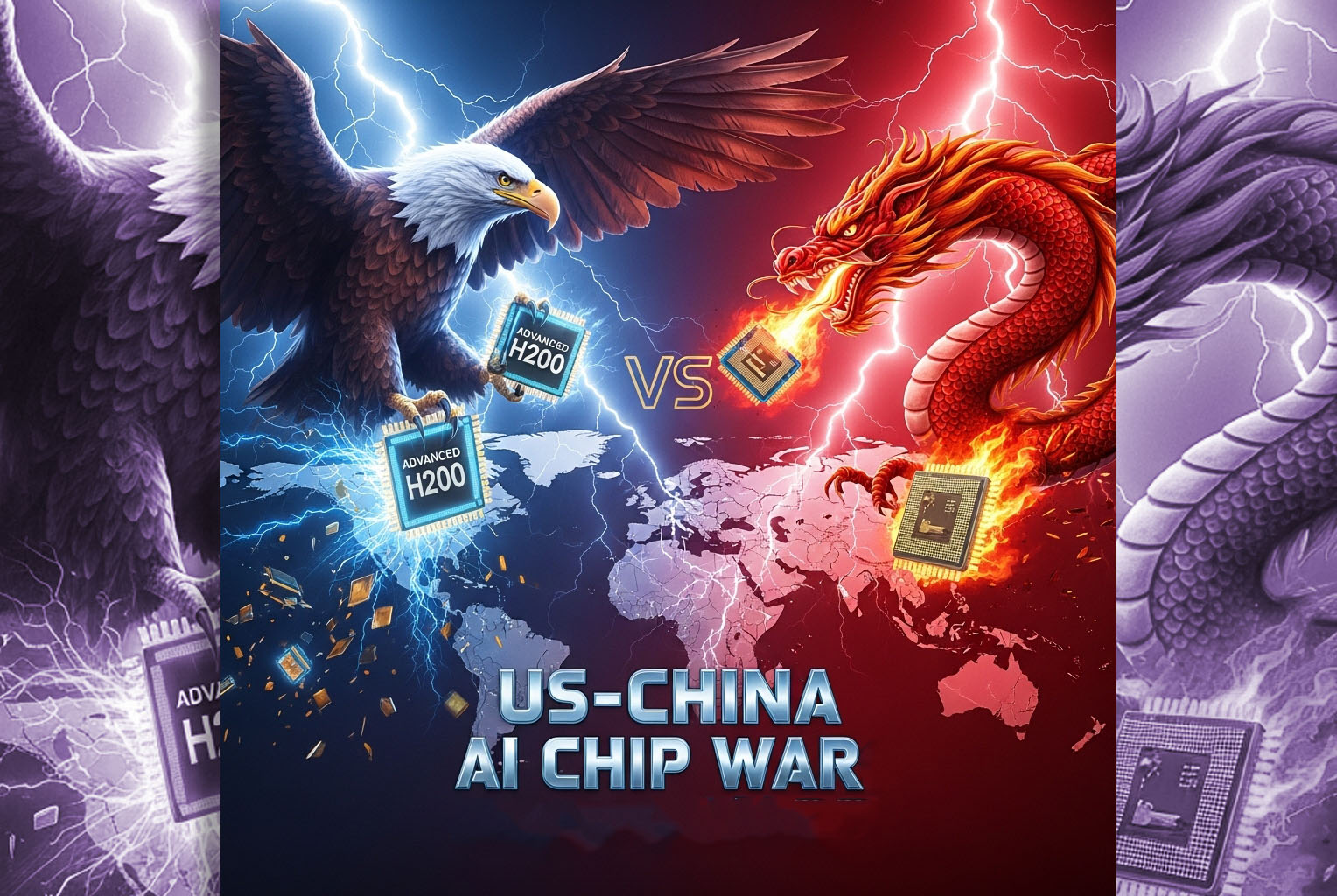
The US-China AI chip war has reached a fever pitch in December 2025, with high-stakes maneuvers on both sides that could define the global tech landscape for the next decade. At the center: advanced semiconductors like Nvidia's H200, critical for powering generative AI models that drive everything from ChatGPT successors to autonomous weapons. While Beijing scrambles to build domestic alternatives amid tightening U.S. export controls, Washington is leveraging a mix of restrictions, strategic sales, and innovation incentives to maintain its edge. Is America truly winning? The latest developments—from Trump's controversial H200 approval to a new congressional bill—suggest yes, but the battle is far from over.
This escalation comes as AI's economic stakes skyrocket: PwC projects $15.7 trillion in global value by 2030, with chips as the chokepoint. As KOSU reports, China's chip industry is rallying in the shadows of U.S. curbs, but American firms like Nvidia continue to dominate supply chains. Let's break down the December headlines, key players, and why the U.S. holds the high ground.
The Spark: Trump's H200 Chip Sales Greenlight and License Reviews
The month kicked off with a bombshell from President Donald Trump: On December 8, he announced a "pay-to-play" scheme allowing sales of Nvidia's powerhouse H200 AI chips to China, complete with a 25% U.S. government fee on transactions. This rollback of Biden-era restrictions—framed as a revenue booster—has sparked fierce debate. Critics, including a New York Times op-ed, argue it's handing Beijing the keys to AI dominance, enabling faster training of models like Huawei's DeepSeek.
But here's the twist: Just days later, on December 18, the U.S. Commerce Department launched a formal review of export licenses for H200 shipments, signaling no full retreat. Sources tell Yahoo Finance that this scrutiny could block or condition sales, ensuring U.S. oversight while extracting economic value. Trump's move? A calculated gambit: Fund domestic R&D with fees while keeping China dependent on American tech.
Point-by-Point: What the H200 Means in the Chip Arsenal
- Tech Specs: The H200 boasts 141GB of HBM3e memory—double the H100—enabling 30% faster AI inference for large language models. Priced at $40,000+ per unit, it's a goldmine for Nvidia, whose stock surged 5% post-announcement.
- Strategic Angle: Sales could net the U.S. Treasury billions, per FDD analysis, offsetting CHIPS Act costs ($52B invested in U.S. fabs).
- China's Response: Huawei's Ascend 910C lags in efficiency, forcing reliance on smuggled or licensed imports—exemplified by a Missouri City man's recent federal charges for trafficking advanced chips.
Counteroffensive: China's Domestic Chip Push and the Talent Race
Beijing isn't standing idle. In response to U.S. controls since 2022, China has poured $47B into its semiconductor sector via the "Big Fund," aiming for self-sufficiency by 2030. SMIC's 7nm breakthroughs and YMTC's NAND advances show progress, but a CFR report highlights Huawei's persistent deficit: No chip matches Nvidia's ecosystem for AI training scale.
The real wildcard? The AI talent war. As CNBC's China Connection notes, the U.S. attracts 70% of global top AI researchers (per "Chip War" author Chris Miller), with H-1B visas fast-tracked under Trump. China counters with "Thousand Talents" incentives, but brain drain persists—over 10,000 experts relocated to Silicon Valley in 2025 alone.
U.S. Advantages in the Talent and Innovation Front
- Ecosystem Lock-In: Nvidia's CUDA software is the de facto standard; China's alternatives (e.g., CANN) trail in adoption.
- Investment Surge: U.S. fabs (TSMC Arizona, Intel Ohio) will produce 20% more advanced nodes by 2026, per Commerce Dept. data.
- Allied Front: The "Chip 4" alliance (U.S., Japan, Netherlands, Taiwan) enforces multilateral controls, squeezing China's supply.
Legislative Fireworks: The Push for a Total AI Chip Ban
Adding fuel: On December 18, House Democrats introduced a bill to outright ban advanced AI chip sales to China, citing national security risks like enhanced PLA surveillance. Sponsored by Rep. Raja Krishnamoorthi, it targets any semiconductor enabling "supercomputing at scale," potentially overriding Trump's sales plan. With bipartisan support (GOP hawks on board), passage by Q1 2026 seems likely—echoing the 2022 CHIPS Act's success.
Critics warn of backlash: A ban could accelerate China's $100B+ domestic push, per Asia Financial. Yet, proponents argue it buys time for U.S. leads in quantum-resistant chips and edge AI.
Risks and Global Ripples
- Economic Blowback: Nvidia loses $10B+ in potential China revenue; U.S. firms like AMD face collateral hits.
- Geopolitical Heat: Escalation risks tariffs or IP theft spikes—recall the 2024 Huawei CFO saga.
- Winners Beyond Borders: Taiwan (TSMC) and South Korea (Samsung) profit as neutral hubs, while Europe lags with ASML export curbs.
Why America is Poised to Win: A Balanced Verdict
Despite the drama, the U.S. holds a commanding lead: 92% market share in AI GPUs (Statista 2025), unmatched R&D ($200B federal AI budget), and a web of alliances. Trump's fee-based sales? A masterstroke—monetizing dominance while stunting rivals. China's gains are real but fragmented; Huawei's chips consume 50% more power for equivalent performance.
As Chris Miller warns in CNBC, the war is now about "computing brain power and electricity"—arenas where U.S. hyperscalers (AWS, Azure) reign. By 2030, America could capture 60% of AI value if controls hold.
The chip war underscores 2025's theme: Tech as national security. With reviews ongoing and bills advancing, watch for January fireworks.
Posted on December 19, 2025 | By TheVibgyor Team | Category: Tech & AI News